Overlay
Let's talk

Hello!

You Can’t Go Private with a Public Culture

When companies undergo a shift in ownership—especially from public to private—leaders often focus on financial engineering and operational strategy. But culture is where the transformation either takes hold or breaks down. In this post, we share how one leadership team invested in culture before the deal closed, using it to align expectations, retain key talent, and lay the foundation for a high-performance, purpose-driven future. If you’re navigating a public-to-private transition, this is what it takes to bring your people with you.

Culture at the Crossroads: How One Company Turned Going Private Into a Purpose-Fueled Reawakening

For years, this company looked successful: growing steadily, expanding globally, and leading its category as a publicly traded company that brought prestige and pressure in equal measure. But as time passed, the initial lift from the IPO began to fade. Innovation slowed. Accountability softened. A sense of entitlement crept in, quietly shaping a culture where “good enough” was good enough.

Then came the decision to go private.

Leadership saw the opportunity not just as a financial restructuring, but as a cultural reset. Freed from the optics of quarterly earnings and market narratives, the company could finally do the harder work of building for the long term. But even before the transaction closed, executives knew the cultural work had to start first.

And one leader in particular stepped forward.

The CHRO raised his hand, recognizing that the real unlock wasn’t just capital. The challenge was a lack of shared conviction and internal coherence. Cultural drift had dulled the company’s edge. Employees didn’t yet understand how different the future would be or how much more would be expected. The opportunity wasn’t just to shift ownership. It was to reawaken the company’s ambition and build momentum behind a renewed sense of purpose and performance.

This wasn’t a reactive fix. It was a proactive reset.

The Emotional Terrain: Pride, Entitlement, and Drift

The organization wasn’t broken, but it was coasting. There was pride, but it had hardened into a quiet entitlement. The IPO had lifted morale for years, and many still clung to the belief that the halo of that moment was enough. Results were fine. Work was fine. But “fine” had become the cultural ceiling.

Remote work had frayed relationships. Accountability was inconsistent. Leaders weren’t fully aligned on what the next era required. Across the company, there was a growing disconnect between the urgency the business demanded and the behavior the culture enabled.

This wasn’t just a strategy gap. It was a culture gap. And to close it, the company didn’t need a new policy. It needed a new standard and a new story.

The Culture Reset: From Drift to Drive

Before the ownership shift was announced, the executive team knew something deeper had to change. We partnered with them to lead a Culture Transformation grounded in emotional truth and operational urgency.

It began with listening. We ran Pulse, our internal measure of whether an organization is carrying one coherent understanding of itself, across the global organization—leaders and employees alike—to understand how people were truly feeling. What they misunderstood. What they feared. What was holding them back. The entitlement. The drift. The quiet resistance. All surfaced.

From those insights, we crafted a unifying Culture Narrative. It named the shifts ahead and outlined the specific behaviors that needed to change. It didn’t just explain the “why” behind the transformation. It clarified the “how” and invited people into a new standard of performance and possibility.

The Culture Narrative became a compass for the next chapter: honest, aspirational, and unignorable. It gave leaders a language to align around. It gave managers tools to lead with clarity. And it gave employees the transparency—and choice—they deserved.

It started with conviction. And it built momentum from there.

How to Lead a Culture Transformation in a Public-to-Private Shift

If you’re leading a company through a shift in ownership, whether to private equity or into your next phase of growth, these five imperatives can help turn your culture into a competitive advantage:

  1. Recast the Moment as an Opportunity, Not a Threat

    Going private isn’t a retreat from the public eye. It’s a return to purposeful building. Frame this chapter as a chance to reignite the company’s ambition, speed, and innovation. Invite people to build, not just belong.

  2. Make Accountability a Shared Standard, Not a Slogan

    In a true performance culture, excellence isn’t optional. But it also isn’t punitive. Model a mindset where feedback is normal, goals are non-negotiable, and missing the mark means learning fast, not hiding flaws.

  3. Equip Managers to Carry the Culture

    Culture doesn’t cascade by accident. First-line leaders must be equipped to translate the transformation into real conversations, rituals, and team norms. Invest in manager enablement early. It’s the bridge between vision and behavior.

  4. Root Performance in Purpose

    Numbers alone don’t move people. Meaning does. Reconnect every team to the real-world impact their work enables—whether it’s helping scientists accelerate discovery or communities thrive. When purpose is clear, performance follows.

  5. Lead with Both Data and Emotion

    Culture change isn’t just an operational shift. It’s a human one. Your people don’t need spin. They need truth. Inspire them with a bold vision, support them with tools and clarity, and be honest about what’s changing and why.

Ownership transitions often begin in the boardroom, but their success is won—or lost—in the culture. The most powerful transformations don’t just upgrade processes or portfolios. They unlock a new way of thinking, behaving, and winning together.

If you’re heading into a pivotal moment, remember this:

Transformation doesn’t happen to a culture. It happens through it, powered by conviction and sustained by momentum.

The Belief Gap: Why Product-Proven Companies Still Get Priced Like Yesterday’s Company

A company can change dramatically before the market changes its mind about it.

The product gets stronger. The customer base grows more sophisticated. The strategy shifts. The company moves into larger accounts, new categories, or entirely different conversations than the ones it was having a few years earlier.

Inside the business, that evolution can feel obvious. Outside it, the old picture often lingers.

Investors still compare the company to peers it has outgrown. Analysts use a category that no longer quite fits. Buyers arrive with assumptions formed years ago. Leadership finds itself spending the first part of an important conversation explaining what the company is no longer before getting to what it has become.

That distance between the company you have built and the company the market is prepared to recognize, believe, and value is what we call the Belief Gap.

And it tends to become most visible at exactly the wrong time: when the company is approaching a raise, acquisition, IPO, category shift, or another moment when somebody outside the business is being asked to make a judgment about its value.

The market does not update itself when your company changes

Leadership teams often assume meaningful business change will eventually become self-evident.

If the product is stronger, the customers are better, and the company has clearly moved on, surely the market will notice.

But the people evaluating the business do not have the same context leadership has accumulated over years of product decisions, customer conversations, hires, and strategic shifts. They work with what is available to them.

That might be the current website. It might also be an analyst report written two years ago, an old product announcement, a sales deck, an executive interview, a customer story, a job description, a search result, or an AI-generated summary drawing from several of those sources at once.

The problem is often less that any one thing is completely wrong than that each surface is telling a slightly different version of the company.

Sales describes it one way. The investor deck frames it another. Product still uses language inherited from an earlier category. The homepage reflects the latest strategy, while the rest of the company’s public record does not.

Every piece may be defensible. Together, they can leave the market trying to assemble a company that no longer exists.

This is why repositioning can disappoint even when the new messaging is good. Leadership changes the story, launches it, and assumes the market’s understanding has changed with it.

Usually, it has only started to.

The real problem is recognition

There is a difference between saying something new about a company and changing what people believe the company is.

A sharper message can make the business easier to explain. A new identity can make it more distinctive. A new website can put the latest strategy into the world.

But none of those things automatically replaces the picture the market already has.

Recognition has to be built across the places where people encounter and evaluate the business. The current story has to become more coherent and more credible than the accumulated evidence of the old one.

That starts with being precise about what is actually true.

Not what leadership wishes the market would think or what sounds strongest in a positioning exercise. The underlying conviction of the business: what it has come to believe through the product it built, the choices it made, and the customers who chose it.

That truth also has to mean something to the people encountering it. Facts can establish credibility, but they do not automatically make the difference matter.

This is why we build Conviction and Emotional Impact together. One establishes what is true and why it matters. The other defines how that truth needs to be experienced for belief to form.

Once those two things are clear, the work becomes less about inventing more ways to describe the company and more about making sure the same underlying truth survives everywhere it travels.

You can usually see the gap before the market prices it

The Belief Gap rarely appears out of nowhere.

Leadership hears outdated language repeated back in meetings. Sales spends too much time correcting basic assumptions before it can advance the conversation. Different executives describe the company accurately but differently. Analysts place the business in a category leadership believes it has moved beyond. Talent encounters an employer story shaped by an earlier stage of the company.

Sometimes a competitor with a clearer market story begins getting credit for territory the company believes it established first.

None of these signals proves a company is undervalued. They do suggest that market understanding may be trailing business reality.

That is worth knowing before a defining moment begins.

The temptation at that point is to jump straight into expression: change the message, rebuild the website, create the new deck.

The better place to start is with the discrepancy itself.

What does the market appear to believe today? What has become true inside the company that has not yet carried outside it? Where are old assumptions still being reinforced? Where are different teams contributing fragments of the same story?

The answer is rarely a single bad tagline. More often, the company has evolved faster than the system it uses to explain itself.

Recognition has to keep pace

Closing the Belief Gap is not a launch.

The company has to define the truth it wants the market to recognize, build enough shared understanding internally to carry that truth consistently, and keep reinforcing it across the surfaces where judgment forms.

Then it has to keep checking whether that understanding is holding.

Because companies keep moving. Products change. Markets change. Competitors change. Acquisitions, new capabilities, new leadership, and new strategic priorities can all create distance between the business and the picture the market has of it.

A company can close the Belief Gap and reopen it two years later.

That is why we think about Recognition Readiness as an ongoing discipline rather than a rebrand timed to a transaction. The goal is to keep the market’s understanding close to the reality of the business as it evolves.

The benefit is not that every investor suddenly agrees with leadership’s valuation or every buyer understands the company perfectly.

It is that important conversations can begin closer to the truth.

A buyer does not need the first meeting to understand what category the company is really in. An investor is less likely to begin from a comparison leadership believes is obsolete. The executive team spends less time correcting the record and more time making the case for what comes next.

At a value-defining moment, that matters.

A company should not arrive at the point where somebody else is judging its future and discover that the market is still working from its past.

The work is to make sure what the market sees has kept pace with what the company has built, so when value is judged, the company entering the room is the one leadership is actually leading.

Beyond Trends: 2025’s Top 5 Paradigm Shifts for Brands

More is possible for, and expected from, brands than ever before. The role of emotion in heightening the quality of connection has reached a tipping point, pushed over the edge by hyper segmentation, AI, demographic shifts, and ever-increasing competition.

Emotion and E-ROI will dominate brand strategies in 2025—and it’s mission-critical to understand the difference between them.

  • Emotion is the energy that sparks connection—how a brand makes its audience feel.
  • E-ROI (Emotional Return on Investment) is the measurable value brands gain when they successfully leverage emotion—turning connection into loyalty, brand equity, and revenue growth.

Emotion drives action. E-ROI measures impact. Brands looking to lead in 2025 must embrace both. Here’s how the emotional landscape is evolving and what it will take to win.

1. Emotional Personalization Will Fuel Authentic Engagement

By 2025, generic approaches will be dead on arrival. The brands that win hearts and market share will have outgrown personalization based on demographics or purchase history. Instead, they’ll own emotional personalization, using AI and emotional intelligence (EI) tools to anticipate and respond to customer values, desires, and real-time emotions.

Brands that embrace AI-powered personalization report 26x higher year-over-year revenue growth than their competitors​.


Nike and IBM have led the charge, mining emotional data to craft stories and experiences that resonate with customers’ aspirations. The SNKRS app powers product customization while collecting customer insights that Nike uses to shape brand interactions, and IBM’s Watson customizes customer service responses based on mood and context cues. 

In 2025, expect more brands to meet customers where they are—emotionally and situationally—making each interaction feel human and deeply personal.

2. Purpose-Driven Narratives Will Be Non-Negotiable

With Millennials and Gen Z holding the reins of purchasing power, demand for purpose-driven brands will intensify. Brands that tie their purpose to real societal change will earn the highest E-ROI. Social impact won’t be a bonus for consumers—it will be a core driver of emotional connection and brand loyalty.

Research shows that emotionally connected customers are twice as valuable as highly satisfied customers​.
—Harvard Business Review


Brands like Allbirds and Patagonia have shown how purpose, when woven into every aspect of the business from sustainability efforts to employee culture, can drive both emotional engagement and financial growth. 

By 2025, purpose will be the cost of entry.

3. Brands Will Balance Data with Emotional Intelligence (EI)

Data has been king for a decade, but 2025 will herald the rise of EI as a business asset. Brands will still rely on data, but with a more human lens that balances quantitative insights with the subtleties of emotions. Those who can decode emotional data will deliver experiences that feel intuitive and connected.

Companies ranked highly for emotional intelligence generate 20% more revenue growth and 18.3% higher share price increases​. 
—Capgemini


Brands from Dove to Salesforce are demonstrating the superpower of EI—from challenging beauty standards in ways that meet deep emotional needs, to detecting consumer preferences and sentiment with AI to tailor marketing strategies in real time. 

Such strategies will reverberate across B2B and B2C markets throughout 2025, benefiting both companies and customers.

4. Emotion Will Drive Innovation

By 2025, emotion will influence more than just marketing—it will become central to product development, customer experience, and organizational culture. Brands will embed emotional intelligence in their innovation processes, ensuring new products resonate emotionally from the start, with responsiveness to needs as they evolve.

“We must make a product or service that delivers in the person the emotions we care about—it’s an art.”
—Don Norman, UX Design Pioneer


This shift is evident in Adobe’s creation of a community in which customer feedback drives product updates. Not only do customer concerns and input guide improvements, but the community has forged emotional ties resulting in more repeat buyers and less churn. 

In 2025, this level of connectivity will no longer be exceptional, but expected.

5. Emotional Impact Metrics Will Define Success

As emotional impact takes center stage, traditional metrics like click-through rates and sales will no longer be enough to compete. Brands will need new KPIs focused on emotional connection, loyalty, and long-term brand affinity.

“The ability to recognize and use emotional data at scale is one of the biggest, most important opportunities for companies.”
—Deloitte


For leaders spearheading change, the ability to gauge emotion will determine outcomes of transformation programs.
EY found that traditional KPIs are insufficient, lagging indicators, and that the behavior and emotions of the people are better predictors of whether a transformation program is on track. 

In 2025, internal and external initiatives will lean on emotion-driven metrics that precede, and therefore can help guide and realize, business impact.

E-ROI: The New Currency of Brand Success

The ascent of E-ROI in 2025 represents tantalizing opportunity—and potential peril. Brands that fail to invest in emotion as a strategic asset will fall behind. Those that tune into emotion will not only move their organizations forward but also entire markets and even movements. 

Visibility and functionality are now table stakes. To lead, brands must evoke, engage, and elevate every interaction with emotion as a catalyst for connection. The meaningful and enduring impacts they create for their audiences will translate into transformation, innovation, and growth for their businesses.

Leading in 2025 means leading with feeling.

The New Role of the CMO: Chief Alignment Officer

No role in an organization has evolved more rapidly than the CMO’s. It used to be that owning branding, communications, and campaigns defined the job. Now, CMOs need to be experts on customers, marketing tools and advanced analytics, and business strategy. Brand management remains an essential duty, but in service of driving business growth. Most importantly, because a CMO’s work connects directly to sales, product development, IT, finance, and other parts of the organization, CMOs find themselves needing to play a growing role in aligning their organization around new ways of thinking and working that will help them engage customers more effectively.

For those in TL;DR mode, the quick takeaway is: CMOs are being stretched, so they might sometimes need a hug (but please ask first).

Here’s a by-no-means exhaustive look at some of the shifts that we’ve seen impacting how a CMO shows up:

From To
Voice of the Brand Voice of the Customer
Intuition & Instincts Data & Technology
Brand Management Brand Innovation
Strategy + Execution Alignment
Awareness Recognition


Voice of the Customer

The amount of information we have about customers is only increasing. How does a temperature between 70 and 75 degrees impact consumer behavior on Mondays vs. Fridays? What is the correlation between a new Netflix series and GPU buying decisions? What invisible patterns in customers can data now make visible? More and more, it’s up to the CMO to develop the customer insights that shape how a business goes to market. And because so many groups touch the customers, from sales to product to finance to corporate strategy, the level of collaboration required to align on these insights requires a significant investment.

Data & Technology

The increase in customer data a business can capture also gives rise to new suites of tools and technologies that a CMO can use to mine for insights, optimize campaigns, and deliver experiences across channels. When almost every brand action can be quantified, decisions about how to go to market are becoming increasingly data-driven. As a result, the CMO is responsible for leading the digital transformation of the marketing organization, which requires deep partnership with IT (among others) to develop the tooling and data models that align with the organization’s technology systems. While a CMO needs to rely on her or his instincts and intuition when it comes to decision making, increasingly they need to justify their strategies with that data when it points in a certain direction. The more fluent a CMO becomes in technology, the easier it becomes to reconcile data-driven insights with gut instincts.

Brand Innovation

More than anyone in the organization, a CMO needs to connect the dots between a brand’s legacy and its future vision. As much as products need to innovate, brands must as well to remain relevant: messages need to resonate with how the world is changing, and their expression needs to drive differentiation. But in doing this, a brand must also feel familiar and take advantage of the equity it’s built with audiences. As brand management becomes increasingly data-driven, brand innovation is also becoming more dependent on analyzing trends, creating new audience definitions and segmentations, and delivering next-level experiences that are hyper personalized and hyper-relevant. And these insights provide fuel for both brand and product innovation. The CMO that can use data to drive innovation across the organization is one that will stick around.

Awareness & Recognition

For years, marketing’s job was to be seen: build awareness, own share of voice, stay top of mind. That’s no longer where the real evaluation happens. Customers, investors, analysts, and recruits increasingly form a point of view about a company before anyone from the company ever speaks to them—often by asking an AI system what the company is. That system doesn’t call sales. It assembles an answer from whatever is already on the record: the website, the product pages, executive interviews, customer language, analyst coverage, and years of scattered marketing history.

When that record is current, consistent, and complete, the AI’s answer sounds like the company. When it’s stale, contradictory, or thin, the AI defaults to the nearest familiar category—and the company gets misunderstood, for example, seen as smaller, older or something other than it has earned the right to be.

This is the shift CMOs are living through right now. It’s not enough to be found. A company has to be recognized—accurately, consistently, and for what it has actually become, not what it used to be. That’s a brand problem before it’s a technology problem, and it’s quickly becoming one of the most consequential things a CMO owns.

Building Alignment

It’s not enough for a CMO to develop a winning marketing strategy and execute flawlessly. As organizations become increasingly customer-centric, a CMO needs to bring every function in the C-Suite into the conversation about how to drive growth. From gaining the full embrace of Chief Revenue Officer for their marketing strategies, to the creativity of the CTO as you make your strategies more data driven, to HR working to bring new talent to the table, to the head of Product working in partnership around how to claim new audience segments, and the CTO finding budget to drive the strategy forward, marketing has become increasingly a team sport.

It’s no wonder that CMO turnover is high, and those in their positions feel they’re continuously in the hot seat. While the complexity of marketing is growing and budgets are coming under increasing scrutiny, there’s never been a more exciting time to be leading a marketing organization. All the data organizations have been amassing and the tools ready to parse it can reveal truly amazing insights about customers and how to connect with them. But only if a CMO can enlist the organization in lending a hand in making this all happen. And this comes down to storytelling and building alignment.

We’ve worked with many organizations to craft what we call a Growth Manifesto—a strategic narrative that shows how the thinking that goes into brand development can open up new possibilities across an organization—from how people think about innovation to the collaboration required to bring new ideas to life. We’ve seen that a Growth Manifesto serves as an incredibly effective tool for building that alignment that is essential to getting every part of an organization living a new brand promise. While CMOs will always own the brand, communications, and marketing lanes of a business, as their role evolves, we’re seeing how they also need to become experts at building alignment between the functions that marketing depends on.

We think about that alignment challenge as closing the distance between the company a business has actually become and the company the market—human or artificial—is prepared to recognize, believe, and price. Closing that gap has quietly become one of the biggest jobs on a CMO’s plate.

If you have thoughts about the new challenges CMOs face today, please add to the conversation below. And if you’re thinking about ways to address specific marketing challenges in your business, we are always happy to help you think through how to approach the challenge.

Emotive Brand is a brand strategy and design firm for product-proven B2B technology and AI companies. We help close the distance between the company you’ve built and the company the market is prepared to recognize, believe, and price—so you’re understood, valued, and priced for what you’ve built.

Q&A with Sarah Cincotta of Aperian About Rethinking the Brand of a DEI Pioneer

As the DEI category grows larger and new entrants fight for attention, it can be hard for companies to identify the right partner for their journey of creating an inclusive workplace. Founded in 1991, Aperian is a pioneer in helping organizations develop culturally diverse teams that deliver measurable value. Trusted by over half of the Fortune Global 100, their experience serving over three million learners has driven their evolution into a data-driven, product-led company.

Emotive worked with the Aperian leadership team to redefine the company’s brand as it embraced a new strategy, refreshed its values, and developed a new visual and verbal identity to further differentiate its offering in a crowded space. As they go to market with an updated brand and story, we had a chance to chat with Managing Director of Global Marketing Sarah Cincotta to get her insights on the process of rebranding an industry leader to accelerate its growth.

Emotive Brand: There was a lot going on when you undertook this work. Your two co-founders were stepping back after decades of work to build the brand, and your two co-presidents were stepping up to face the challenges of competing in a rapidly growing space. Why was this the right time to re-examine your brand? 

Sarah: The DEI landscape has really exploded over the last few years, and every indication is that it will be a growing part of the corporate culture and governance landscape going forward. This has attracted a number of new competitors to the space who are aggressively building their brands. We found that even though we have longevity and heritage in this space, our message was getting drowned out. One of the biggest assets of being an early leader is that a significant portion of our business historically has come from client referrals. But we got to the point where we were seeing business plateau, and we knew that to keep pace in this rapidly growing landscape, we needed to reposition our brand.

Emotive Brand: Aperian’s go-to-market strategy is also evolving to match the dynamics of the marketplace. How did that play into the work of updating your brand?

Sarah: Aperian offers both live training and asynchronous online learning. As our company evolved, clients began to associate the Aperian Global brand with live training and the GlobeSmart brand with our online products. The market wasn’t always aware of the connections between our offerings, and even internally we struggled to blend those sides of the business. We’ve also added other products to our portfolio during our 30 years in business, and we used the brand development process as an opportunity to unify all of our offerings under a single umbrella.

A big part of this process was building an identity around Aperian that could speak to our existing customers as well as help us build awareness in the SMB segment. With our go-to-market strategy shifting to a product-led approach, our goal was to develop a brand that could deliver a unified message across all segments. By simplifying our brand architecture, we can go to market with a suite of products rather than point solutions to meet the needs of different customers. Our new brand story also gives our sales team a better starting point for engaging customers in our portfolio. And as we get more comfortable leaning into the emotional foundations of our brand, we’re already seeing how our brand is opening the door for new types of conversations with the people we serve.

Emotive Brand: What advice would you give other companies, regardless of industry, that are operating in an increasingly competitive market?

Sarah: A great exercise would be to see how difficult or easy it is for employees across the business to articulate what makes your company different and better than everyone else. At Aperian, we had the problem of having too many reasons we could claim we were different, which is not a bad thing, but we found it prevented us from rallying our brand around a single idea that we stand for in the hearts and minds of our customers.

Emotive Brand: So what is the idea that you rallied around?

Sarah: Simply put, it’s the butterfly effect: how one small change can cause ripples that create an outsized impact. We call this The Aperian Effect, and it gets to the heart of how pursuing our mission can change a workplace, an organization, and the world for the better. After the team landed on this idea, we discovered that back in 2016, Ernie, one of Aperian’s co-founders, sent a state-of-the-union email to employees that referenced this same idea. It was a confirmation that in the process of developing a brand for our next chapter, we were staying true to the DNA that makes Aperian such a unique company.

Emotive Brand: Before partnering with Emotive, your internal team had done some work to update its brand platform. What did you discover while working with Emotive? 

Sarah: Our previous work helped us align on the language of our key messages, but what was missing from our work was the emotional piece. Focusing our team on how we want our customers to feel opened up entirely new conversations about where our brand could go. Our work is intrinsically emotional, but getting intentional about creating a specific emotional space—and having the confidence to lean into it as we go to market—has made a big difference in how we’re building relationships with customers.

Emotive Brand: Aperian is blessed with a dedicated group of people who have been with the company for a long time, and a new brand represents a significant change in how a company sees itself. How did you onboard people into this process? 

Sarah: There is a good reason why one of our values is, “Stay curious and keep learning.” This mindset creates the perfect opening for communicating openly and transparently about the motivations behind undertaking this work. Our management team hosted bi-monthly coffee chats where people could bring their questions, which allowed employees to learn more about the thinking that went into the new brand. We also made it clear that this was an evolution of Aperian, not a dramatic shift. And by educating our teams about brand and letting them see the iterations of the work that helped us land our new identity, they could see the care and consideration that went into the process. We have a new logo and a new color palette, which is great, but our employees also understand the why behind them.

Emotive Brand: As part of this work, the team also refreshed the language around the company’s values. Why was this important to do? 

Sarah: The rebrand could have fallen flat for our employees if we hadn’t taken the time to reflect on our values. In the same way that we refreshed our brand to support our changing strategy, we agreed that our values had to shift to align our culture to our aspirations as a company. So we undertook a process to preserve the ideas core to our existing values, but to evolve them to shape the behaviors that would take us forward as a company. We articulated our new values using language that is more action-oriented, measurable, and emotional, and we’ve found this has made our values more relevant and accessible. Their language is showing up in everyday conversation. Teams are using them to ask better questions about how they can contribute. And across the company, we’re seeing how they can elevate our expectations about how we show up for each other.

Emotive Brand: Now that you’ve launched your new brand, what initial reactions have you experienced? 

Sarah: The big takeaway from me, internally and externally, is that in creating a better articulation of who Aperian is and what makes us a different kind of company, we’ve unlocked a new language for sharing our story with the world. It’s a matter of simplifying so we can amplify, which in a crowded market makes a tremendous difference. We’re getting ready to roll out a campaign, and just knowing that we’ve found the right notes to hit gives us confidence that it’s going to make an impact.

Finally, the fact that our co-founders, Ted and Ernie, believe in the work we’ve done is the most important endorsement. We’re stepping into the future in a way that honors our past, which is critical to the customers and employees alike who have made Aperian a company unlike any other.

Interview with Eric Futoran on Rebranding Embrace to Lead the Mobile Revolution

September 2026: Since this conversation, Embrace has reached exactly the kind of value-defining moment we discuss below. On July 21, 2026, Embrace announced its acquisition by Palo Alto Networks, extending Palo Alto Networks’ observability platform with Embrace’s real user monitoring and digital experience monitoring capabilities; the deal closed on August 27, 2026. It’s a milestone that reflects the bold, disruptor position Eric and his team built the brand around. We’re proud to have helped Embrace articulate and express that position as the business evolved. Read more about that work in our Embrace case study.

Embrace is a company dedicated to unlocking the potential of mobile technology. As companies envision new ways that mobile can transform the ways people live, work, and play, they are asking their mobile teams to deliver mission-critical experiences that are increasingly bold and ambitious. Developers need help managing the growing complexity of what they build—so they can dream bigger about the role mobile plays in their future—which is what Embrace helps them do.

Emotive worked with Embrace Co-Founder and CEO Eric Futoran and his team to redefine their brand and align their organization on the next chapter in their growth story—you can see the full engagement in our Embrace case study. As they prepared to launch the new Embrace brand, we had a chance to sit down with Eric to get his insights on how the process helped bring his team together to bring a new story to market.

Emotive Brand: You spent a few months going deep into the why, how, and what of Embrace, with a lot of healthy debate about how to tell the Embrace story. What are some things you learned along the way?

Eric: As a founder, I’m so used to thinking about the long-term vision for the company and how we can power the incredible promise of mobile. And in some ways, this visionary thinking is too far out for people to map to the work in front of them. A lightbulb went off after a conversation with Emotive about how to frame the role our brand needs to play over the next two years. It made the goals much more practical and a lot easier because it didn’t have to play out the brand vision in such detail. And to be honest, I think it made the result more exciting because we could see how it could impact the ways we go to market. While mobile disruption will take five or ten years to realize, not every company thinks that far out. The most significant personal learning was to shrink my time frame and be okay with that.

Emotive Brand: Throughout our work together, you continually encouraged us to swing for the fences about where we could take the brand. What were your instincts telling you about creating a bold story?

Eric: My thinking was that we needed to push ourselves out of our comfort zone. For all sorts of good reasons, we are focused on the weeds of what’s in front of us. But you don’t build a brand for today. A brand needs to be aspirational by definition and build the bridges between today and the better future we’re all working to create. If we had stayed too much in our comfort zone, we would have created a brand that was good for us today but not tomorrow. By learning how to get comfortable operating outside our comfort zone, we recognized new possibilities for where we could take our brand.

Emotive Brand: Building a start-up brand in a newly forming category brings several challenges in building awareness, understanding, and advocacy with developers. How did you see emotion as part of the equation in bringing this all together?

Eric: When you connect with the brand, there’s an implicit connection that goes beyond the functional ways you will use the brand. For example, when you look at the Apple logo, it has nothing to do with what they do and everything to do with setting the emotional context for their offerings. When you’re talking to developers, I think it’s crucial to think of them as people with goals that inspire them and challenges that give them headaches. Developers are so used to seeing the same set of messages and color palettes and comparisons that they feel like they’re being sold to rather than a brand trying to build a genuine connection based on how well they understand their experience. Our goal is to make developers feel empowered by giving them technology that meets their needs and confident that they have a great partner in Embrace to help them achieve their goals. Emotion allows developers to recognize their aspirations and pain points in our brand, which creates a very human connection.

Emotive Brand: As someone who has successfully brought two start-ups into growth mode, when do you think it’s the right time to invest in brand?

Eric: I’ll preface this by saying I hate this answer—it depends. Everyone has a different product and a different strategy. For us, we’re trying to do something very different in our space and cut through a lot of noise that is out there. So brand is an important tactic to tell a unique story that keeps us from getting lumped in with companies we don’t compete against.

If you think about the other end of the spectrum, where 80%–90% of SaaS products live, they drive differentiation based on doing something slightly better or cheaper than their competitors. These companies typically use brand to create a different emotion rather than paint a bolder vision. The majority of SaaS companies are highly iterative, which Embrace is not. We built our company to be a disruptor.

Emotive Brand: We started working together when there were signs of a weakening economy, but you invested in your brand when others were holding back. What were your reasons to keep pushing forward on the brand front?

Eric: A lot was the practical nature of where we are as a company. We have a best-in-class product with a well-defined product-market fit, but no one knows about us. Our best move in this situation is to lean into brand and marketing initiatives to fuel our growth. Until now, we’ve underinvested in brand because we never felt the pain because the economy was on fire and people were less cost-conscious. The rising tide lifts all boats. But now, as the tide is wavering, we need to make sure we’re positioned to compete in any market condition. We’re still growing, but our brand activities give us the ability to grow faster.

When VCs tell companies to lengthen their runways, I think that’s good advice for seed-stage companies where money is the greatest asset instead of time. For a growth company, time is of the essence because you’re now measured on what you achieve or don’t achieve over time. To reach our potential, we need to increase our awareness, and brand is a key component of that.

For a growth company, time is of the essence because you’re now measured on what you achieve or don’t achieve over time. To reach our potential, we need to increase our awareness, and brand is a key component of that.

Emotive Brand: As a CEO, you were deeply involved in this process. What were the pluses and minuses (if any) about a founder being so involved?

Eric: In many ways, it depends on the founder. We needed to make a bold pitch based on where Embrace is as a company. And for that to occur, we had to get out of our comfort zone. I think I implicitly had to be part of that initiative because it is really hard to ask a head of marketing or sales or product to put themselves out on a limb and take that risk without the founder being part of it. I’m not a marketer by any means, but I know the power of good storytelling. So from an ideal perspective, the founder and CEO should 100% be part of the process to ensure the brand’s story aligns with the bolder vision for where the company is heading. You’re not just telling the story of this moment in time—you’re telling the story of the people and the journey as part of that company. And so, if I hadn’t been as involved, we may have lost some of the potential of what the brand can do and the impact it can create.

Emotive Brand: As part of this work, we worked with you to develop a Growth Manifesto that tells the story of how you plan to grow over the next two years and beyond. How did this help your team connect the dots and align around the strategic pieces of your business, product, and GTM strategy?

Eric: It helped build a bridge between the near-term goals for driving awareness and our longer-term vision. When we started writing the Manifesto, the combination of the two came together. We were able to frame what we do in the five-to-ten-year vision of how mobile will transform the world and get people excited about this future, and then we made it real by focusing on the next two years and what will be required. The two horizons don’t have to be mutually exclusive.

But the team is still digesting the Growth Manifesto. When rolling out anything new, you need to create a drumbeat of communications and experiences. I have an ‘ism’ on this called the Rule of Three: give people the information in three ways and at three different times. That’s what we’re doing with the manifesto so that it becomes part of our everyday thinking.

Emotive Brand: Because we’re Emotive, we need to ask you about feelings. Do you think feelings and emotions play an essential role in the B2B technology and AI space?

Eric: 100%. Our customers are people. The people they serve are people. I think a lot of businesses forget that. We’re a very customer-first, customer-centric company because I truly believe it’s the right way to do business. Rather than B2B, we’re Human-to-Human. Retention is king for all SaaS companies. In addition to having a great product, you need to treat your customers right because they are making a bet on you. There will be bumps in the road, but they’re betting both on your vision and your ability to support them when the product isn’t working the way it’s supposed to, and they need you to take action. The only way you retain customers is by treating them like partners, like people whose success you genuinely care about. That’s the only way you’ll build a relationship that can weather the storms that arise. It’s not commonly expressed in the B2B space, but business is all about leading with emotion.

Market Insights That Come from the Heart

Asking different questions can reveal new insights about your market.

No matter what your company sells, the markets where you operate change constantly. One day the sun is (metaphorically) shining, and the next day a tanker gets stuck in a canal, there’s a virus outbreak, a prominent bank fails, a fragile aging musician opens fire on a twelve-pack of beer, or some other event happens to change our collective outlook.

Reading the tea leaves of market dynamics is both art and science. There is no shortage of brilliant people putting advanced technology to work to uncover patterns and make predictions for all types of scenarios. At Emotive Brand, we believe that in addition to market analytics, there are emotional insights that you and your team can gather that can help you paint a fuller picture of how your world is shifting and the role your brand can play in keeping your business in front of these changes.

Emotion Is Critical to Your Peripheral Vision

In their book, Peripheral Vision: Detecting Weak Signals That Will Make or Break Your Company, Wharton professors George Day and Paul Schoemaker wrote, “You must ask the right questions to identify what you don’t know so you can explore the edge of your business… You must identify new sources of information or new ways of scanning to unveil important but hidden parts of the periphery.”

Emotions, while harder to quantify, offer critical insights into your market opportunity. From the macro to the micro levels, emotional information can explain the synaptic connections between what’s happening in the world and what’s happening in your business. While emotions don’t answer everything, they do provide a critical layer of context that makes market behaviors seem less arbitrary and a little more “human.” And as you get more attuned to how the emotional landscape contributes to or detracts from your success, you gain the confidence to speed up decisions, make better bets, and deploy your brand in the best ways possible.

Below are a few lenses you look through to develop market insights that will expand your peripheral vision as a business:

Macro Forces

The economic outlook, employment and wage trends, the regulatory environment, political and cultural currents, public health issues, environmental issues, social trends, and other top headlines—these primary ingredients create the bouillabaisse of market dynamics. But how often do you look at these macro forces as waves of emotion moving through the population? Looking at the feelings generated by the headlines that impact your market gives you insights into opportunities for the role your brand needs to play in the world. And having this conversation with your team every week keeps your brand in tune with the world.

The Category

There’s a baseline, meat-and-potatoes narrative that defines the category where you compete. Many of our clients in the enterprise technology space discover that they default to telling a category story, which in general is pretty generic. Differentiation comes down to products and features—your “what” and “how”—rather than the articulation of “why” your company exists. Categories drive sameness for the sake of making easy comparisons, and the safe players tend to hold to the center. Emotion gives you a fulcrum to break out of the box, or better, expand it, to see and understand what you see as possible. And when people connect with your vision for how you can change the world, there’s a high likelihood they’ll be rooting for your success.

The Competition

As your competition grows more sophisticated, they will look to claim a specific emotional territory. Branding in consumer packaged goods is where you find true expertise in using emotion to claim specific turf. How else can you choose from the 27 different toothpaste brands on the shelf? For longer sales cycles, once someone is in the consideration phase, it all comes down to the emotional cues your brand delivers that elevate the decision-making from rational analysis to the emotional moment of commitment. By understanding the emotional space your competition is trying to own and ensuring your emotional space is better defined, more compelling, hyper-relevant, and executed with originality, you’ll gain the upper hand as you compete for the same customers.

Your Customers

Do you look at your customer as the person with the budget and purchasing authority? Or, as someone driven by human desires and motivations? Seeing customers as people you can make successful allows you to engage with them on a deeper level. You tap into their ambitions and their fears. You ask different questions that give you insight into how they want to succeed, instantly deepening the relationship. And when you think of the customers you have today as the leaders of tomorrow, it pays to invest in building their loyalty early. When a brand builds deep, meaningful connections with customers, you earn the permission to innovate in new ways and lead your customers to new destinations. The trust you build inspires them to come along for future journeys.

Users or Consumers

B2B. B2C. B2B2C. B2H. We like this last acronym because we believe the best brands are Business to Human. The humans could be the people buying and consuming your product. Or they could be your partners, channels, or resellers you depend on to bring your brand to different audiences. No matter where you sit in the value chain, the question to ask is, what emotions do users or consumers count on you to help them feel? The mechanics are different when selling hand soap versus a SaaS platform, but it still comes down to delivering an experience that communicates emotion across the entire value chain. Creating emotional bonds with people turns them into true advocates and evangelists. Having a great product is key to connecting with consumers. But having an emotionally-driven brand accelerates your ability to increase market share, galvanize a tribe, or lead a movement.

Your Company

Your company is a system of functions that work together to deliver a product, service, or offering. But how connected is your company to the emotions that your brand stands for? Do people proudly wear your swag? Do they consistently engage customers and partners in ways that convey a clear set of emotions? When your company is clear about the feelings behind your experiences, you can stand out in any market. Because it’s the companies who own the emotional experience inside and out who claim a stake in the ground and are genuinely different. And according to the people working inside them, truly better.

By looking at each aspect of how you go to market through the lens of emotion, odds are you’ll uncover some white space you haven’t considered and some insights that can sharpen what you’re already doing well. And if you ever need a partner exploring emotion-driven market insights, that’s what Emotive Brand does every day.

Why It Pays to Aim High: Reflections on the Inauguration

I’ve not always been American. I moved to the United States at the age of 13, reluctantly at first, because who wants to move anywhere at age 13? But in a very short time, and especially by the time I started college, I was fully bought into the proposition of America. At the tender age of 17, my friends back in the UK were finishing their A-levels and already having to close the aperture on their future careers by declaring what they would study at University. I, on the other hand, was looking at a veritable smorgasbord of classes and majors offered by Barnard and Columbia Colleges—two massive educational edifices flanking Broadway in the Morningside Heights neighborhood of Manhattan.

Options and choices. To me, this defines the American offering—the choice of what to study, who to spend time with, where to live, what to believe in, when and how to talk, and the freedom to live out one’s choices and their natural consequences, as long as they fit into the framework of the Law and good citizenship. I freely availed myself of the choices I was offered, charting my own course, creating my own options where I didn’t like what already existed, certainly abetted by my white, middle-class privilege, and limited only by constraints of my own making. And it was good. America was good.

Then 2016 happened. Then 2017, 2018, 2019, and 2020. And just two weeks ago, January 6th happened. And I’ve been disgusted. Disenfranchised. Ashamed. Embarrassed. One man, his supporters, and his scared, beholden party took practically everything about the American proposition and turned it on its head. And I lost myself in my assumed home country. The American flag that my husband insisted we fly outside our home had become wretched to me.

No one was more surprised than I as tears flowed freely down my cheeks as I watched Joe Biden and Kamala Harris take their oaths and assume their place of national leadership this morning. I rejoiced as I watched the National Mall and Capitol festooned with American flags, Lady Gaga choking back her own tears as she sang the National Anthem, J Lo bedecked in suffragette white, and Hillary Clinton in the purple of bipartisan unity. I imbibed the significance of Latina Supreme Court Justice Sotomayor swearing in the first woman of African American and Asian descent to the office of Vice President. I lapped it all up—the rampant and unabashed paeans, symbolism, Americanism, and historic significance that made up this morning’s ceremony.

And as I reflected on my reactions and emotional state, it slowly became clear to me. America is an enduring brand and I am completely beholden to it. America has a clearly defined value proposition and set of values and beliefs. And no matter who assumes the role of “brand manager”—in the case of the last 4 years, Donald Trump—those values and beliefs are evergreen. Further, we, as target audiences and consumers of Brand America have only the original brand strategists, the Founding Fathers (and their wives, one presumes), to thank for having the clarity of vision and foresight to set the brand bar high, to ensure that it would and could withstand the slings and arrows it would have to endure over its lifetime.

And so, herewith my humble offering as a consumer of Brand America, and also a student and sometimes teacher of brand strategy:

  1. Aim high. Brands that move people must operate at the highest, most inspirational level. You can always scale back but you can never go high again if you start low. It’s no accident that the Pledge of Allegiance, pithy though it may be, is emotive and rich in language.
  2. Choose your stewards wisely. In the hands of the wrong brand manager or even the wrong celebrity spokesperson, your brand can suffer almost irreparable damage. 45? Enough said.
  3. Consider your brand’s context. When this country was formed, our society and its norms were vastly different than they are today. Even enduring brands, like America, must evolve their expression and take an honest and sincere look at how they walk and talk to ensure that they are culturally and socially appropriate, relevant, and inclusive.

For now, I rest. Tomorrow brings a new day for this brand I’ve appreciated for several decades. As we all know, brand stewardship today is a two-way dialogue between its creators and its consumers. I for one will be happy to participate in Brand America’s revival and rediscover its relevance and message for myself and my fellow Americans.


Image Source: Getty Images

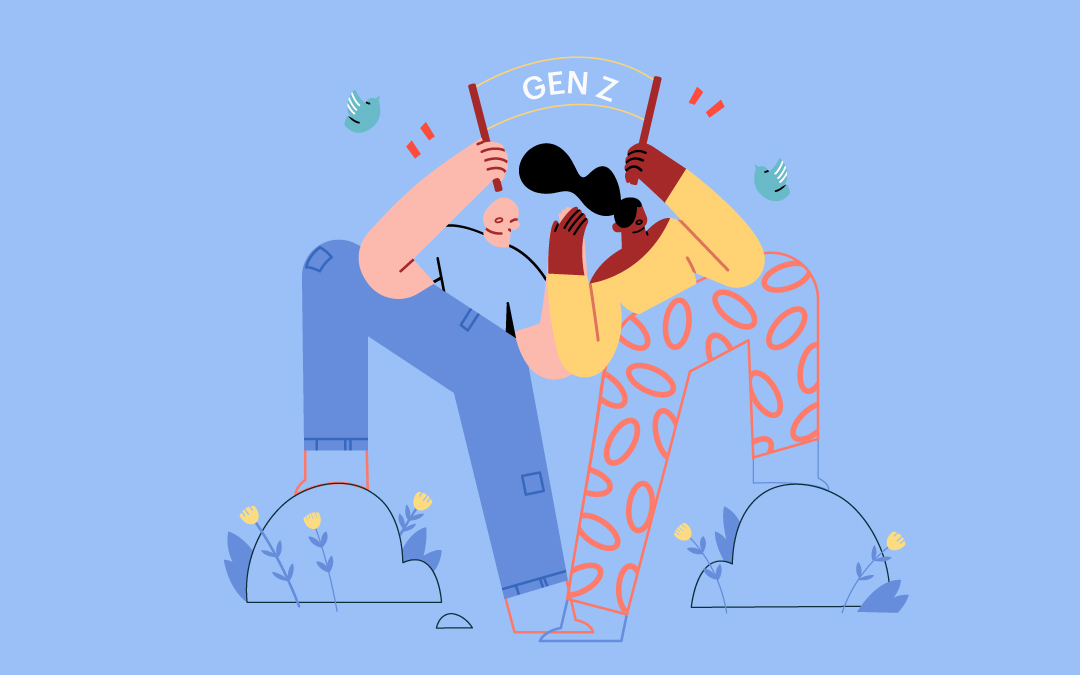
What Generation Z Values From Brands

Just a few years ago, Millennials were the hottest and most talked about generational cohort on the block, driving consumer behavior and value trends in the market. But in 2020, Generation Z has noticeably taken the wheel, accelerating actions and demanding accountability for brands to live and breathe diversity & inclusion, authenticity, and social responsibility.

Who is Gen Z and why are they so influential?

Gen Z, ages 8-23 today, are true digital natives. The first generation to be fully foreign to life before the digital landscape, Gen Z accounts for 20.46% of the total U.S. population (67.17 million), represent the most racially and ethnically diverse generation in history, and together with Millennials account for $350 billion in spending power in the U.S.—an impact impossible to deny for today’s leading brands and businesses.

Gen Z is a generation who leans into the value of self-expression from a non-binary lens, leverages voice and action to force change, and cares deeply about ethical and sustainable consumption.

The generation behaves completely differently from the generations before. Hyper digitally intelligent, Gen Z, and the brands they buy from, have a completely dynamic customer journey—whether the journey begins with an enticing Instagram ad or a pop-up event. Gen Z has made it clear that a hard-hitting, consistent, and relatable brand narrative, online and offline, plays a huge role in winning their attention, hearts, and pockets.

So, what should brands pay attention to when thinking about resonating, connecting, and engaging Gen Z?

1. Diversity & Inclusion

To start, if you’re looking to attract Gen Z, your brand’s diversity & inclusion has to run deeper than performatively plastering words on your careers page or adding more stock photos of people of color on your digital platforms. It’s about being authentically who you say you are. Gen Z’s can tell the difference between the posers and those authentically disrupting the status quo—with ease.

For example, when Rihanna launched Fenty Beauty in 2017, she completely shook the beauty industry. Her line offered 40 shades of foundation (now 50), ranging from the lighter shades typically in abundance in any given makeup aisle to deeper and darker shades that Black and Brown people have struggled to find for decades.

In my 24 years of life, the arrival of Fenty Beauty was the first time I’d ever seen any brand launch a campaign that depicted such a wide range of skin tones and that clearly celebrated people of color who weren’t predominantly lighter-skinned or racially ambiguous. And it didn’t just appeal to me because it was a clear representation of diversity. It was also raw, real, and relatable. It was content I’d never been exposed to. It was content I’d never seen so much of the world witness.

The Fenty Beauty brand, then and now, celebrates and normalizes what it looks like to be a HUMAN. But, it doesn’t stop there. Rihanna has continued this brand narrative across all of her brands including Savage X Fenty, her lingerie brand that recently added pieces for her male audience, and now Fenty Skin which is completely gender-neutral. She’s built her brand around diversity & inclusion and continues to deliver that promise at every touchpoint which is why it’s believable, truly authentic, and here to stay in people’s hearts and minds.  

2. Sustainable Consumerism

It’s imperative for any retailer looking to connect with Gen Z, Millennials, or Gen X to focus on ethics and sustainability. Immense access to digital information has educated and impassioned Gen Z and Millennials to become more environmentally conscious, influencing their consumer behavior and their parents.

As the rejection of fast fashion brands continues to grow, second-hand fashion retailers like ThredUp and peer-to-peer online shopping platforms like Poshmark and Depop continue to gain and maintain popularity. It’s clear that Gen Z wants to consume more while wasting less. In fact, ThredUp’s 2020 resale report estimates that the second-hand market will hit $64 billion by 2024 and is expected to grow to 69% by 2021.

Increased desire to consume more sustainably has also made room for niche household brands—Caboo bamboo toilet paper, Unni biodegradable trash bags, and Blueland eco-friendly cleaning products—to enter the market and appeal to both younger and older generations. This trend is likely to continue as Gen Xers come into more financial maturity and have the means to spend more money.

3. Authenticity

The civil unrest following the killings of George Floyd and Breonna Taylor earlier this year sparked BLM protests around the world and pushed brands to speak out on Instagram to express their solidarity for Black lives. Anthropologie, who posted a quote by Maya Angelou highlighting the importance of diversity and equality, received backlash and public callouts by former and current employees. It became viewed as hypocritical and performative across audiences when it was unveiled that the brand, including brands like Urban Outfitters and Zara, had racial profiling practices within their organizations (racist behaviors like using internal code names for people of color who enter their stores).

Nike on the other hand is a great example of a truly authentic brand. They get their hands dirty in abundance when it comes to corporate social responsibility whether it’s partnering with grassroots organizations to help bridge opportunity gaps for youth in urban communities, responsibly sourcing materials for products, or taking a stand in support of socio-political issues and not just when it looks good. No wonder they’re a Gen Z favorite.

Why do brands need to embrace Gen Z values?

This generational cohort is young, but they have the power of influence when it comes to behavior and value. Not just on themselves, but on all generations. This is why brands must pay attention to this generation. To be a lasting brand, you have to focus on authentic and ethical brand behavior to build brands that Gen Z’s are going to trust, value, and love.

Emotive Brand is a brand strategy and design agency in Oakland, California

Is Revenue Hiding in Plain Sight? Six Steps to Refocusing on the Customer

Leading a B2B technology and/or AI organization is a lot like trying to change the wheels on a bike while you’re still riding it. Half of the time, you’re rethinking internal systems and how to assemble them in new ways. The other half, you’re just trying to keep the business running and avoid any major potholes. There are many different ways to drive an organization, but if you’re not thinking about customer experience at every touchpoint, it might be time for a tune-up.

Sales, Engineering, or Marketing?

If you’re a sales-led organization, you’re primarily focused on revenue, deals, price, and market share. You empower your sales team, invest in training, and drive a disciplined, well-executed process. At the end of the day, you want them to hit their quotas. This model can be very effective. The challenge is that each individual salesperson often creates their own tools to get the job done. This can result in an inconsistent brand experience, where every customer is getting a different version of the story. Moreover, a sales-over-everything culture can create burnout and impact your roadmap with one-off requirements that can’t be scaled across the customer base.

Hundreds of startups in Silicon Valley are engineering-led organizations, with a heavy focus on sophisticated software, data, and analytics. Code supersedes everything, and every possible process is optimized for iterating as fast as possible. When you move fast and break things, you can create something extraordinary. But you can also fall into the ideological trap of building just for the sake of it. It’s not that you can’t be successful, but you run the risk of creating feature functions that don’t satisfy an unmet, underserved customer need.

Marketing-led organizations are all about researching and identifying products or services that your customer needs and wants. In theory, it’s a fantastic model that is mutually beneficial to both the customer and the organization. Unfortunately, in practice, there can be some barriers to entry. Startups, for example, often don’t have the luxury of being marketing-led, as they need to allocate their resources to engineering and sales. Marketing is something they’ll invest in later when they are doubling down on growth. In addition, it can be trickier to get consensus in a marketing-led organization. Whereas sales and engineering have more objective metrics to fall back on, the success and execution of a marketing-led organization often hinges on whether it becomes an essential part of a company’s DNA.

Customer Experience Is the Best Teacher

While all of these paradigms have their pros and cons, if your organization isn’t focused on customer experience at every touchpoint, it doesn’t matter which function is leading because you’ll be severely limiting your growth. The era of asymmetrical communications—top-down or inside-out, where companies push out messages in one direction—just isn’t working anymore.

Customers are more informed, more dynamic, and have higher expectations than ever before. They are expecting a nuanced, two-way conversation.

Plus, the link between online reputation and business performance is staggering. A recent study of the hospitality industry by Cornell University found that for every one percent improvement in a hotel’s online reputation, its revenue per available room improves by 1.4 percent.

Companies need to be receptive and customer-centric if they want to thrive in this climate. This starts with an authentic focus on providing a superior customer experience backed by real conviction—a clear, authentic belief in why your business exists and where it’s going. Why? Because conviction is not only contagious—it sustains growth. According to New York Times bestselling author Simon Mainwaring, 91 percent of consumers would switch brands if a different one was purpose-driven and had similar price and quality.

The Spirit of Customer-Centricity

Now, you might think that marketing is the only place for such a customer-centric mentality, but that’s not the case. One of the biggest mistakes you could make is thinking that the customer only interfaces with a singular marketing message or website. They interact through the product, through sales, or by phoning client services or tweeting at a support channel. All of those touchpoints have to represent the company and brand in a meaningful way.

If you’re a VP of Engineering, chances are you don’t want your top brains spending a lot of face-time with a customer. You want them in front of the screen where they can put their talent to work. But that doesn’t mean you can’t take steps to instill a spirit of customer-centricity in their role.

For instance, product managers should be regularly analyzing the interactions of the customer with the product, as well as talking with customers directly, so they can turn those insights into requirements for engineers. It’s about getting the perfect balance of qualitative and quantitative inputs. If you don’t consistently remind your employees who they are building for, they can lose track of the “Why?”—that larger, aspirational goal of why you’re building products in the first place. Here are some tangible steps every organization can take to create a culture of customer-centricity.

Six Steps to Refocusing on the B2B Customer

  1. Don’t make assumptions about your customers. I’ve been in countless meetings where someone quickly whiteboards a customer journey—all without ever talking to a real customer. When NYPD Commissioner Bill Bratton was tasked with reducing crime in New York, he didn’t just read reports—he rode the rails himself. Quantitative data will get you far, but you can’t really put yourself in the customer’s shoes without qualitative data. That’s how you truly get an outside-in perspective.
  2. With B2B, never forget the customer’s customer. When you’re working with a large enterprise, it’s easy to forget the effects your decisions will have on an individual. You must think all the way through the customer journey. Try to create meaningful outcomes at every step in the process.
  3. In the B2B marketplace, you should design with the same love and attention to detail as you would for consumer products. You may think, “I don’t care how it looks, it just needs to work,” but in an increasingly crowded marketplace, creating differentiation through a delightful customer experience is key.
  4. Never underestimate the power of authentic customer stories. They serve as great collateral for sales, marketing, and social media and remind those in your company who don’t get to interact directly with customers of the impact they are making. Currently, 71 percent of millennials report feeling not engaged at work. But if you’re able to create a situation where employees derive meaning from their work, everything changes. A recent Harvard Business Review study found that employees who derive meaning from their work report almost twice the job satisfaction and are three times more likely to stay with their organization to fuel business success.
  5. Consider your partners. Especially if you’re a B2B selling through a channel, you need to be cognizant of the needs of your partners, as well as your customers. How you show up to your customers is incredibly important, and that’s why you must always maintain brand integrity through each and every channel.
  6. Executive alignment is everything. When you get alignment at the highest level, it cascades throughout the whole company, ensuring that all functions are cohesive and on board.

Customer-Centric ≠ Customer-Led

You may have noticed that I have avoided the phrase customer-led. There’s a key difference between being customer-centric and customer-led. As Henry Ford said, “If I had asked people what they wanted, they would have said faster horses.” Everything you do should be aimed at creating a fantastic customer experience. Nonetheless, you don’t want people-pleasing to get in the way of innovation. Customer feedback is incredibly important, but it can’t be the only data point. When that happens, it can lead to a dangerous feedback loop that creates tunnel vision. Trust your team, create an environment for risk-taking, and then go test the results.

At the end of the day, it doesn’t really matter conceptually who is driving the company. What matters is that everyone deeply understands the pain points of the customers they serve. Everyone, regardless of role, should have a relationship with the customer.

As a leader, you need to facilitate an internal evolution where employees are not only passionate but can see the real-world results of their work. Belief is one of the most powerful tools in business. When people believe in what they are doing, they work harder, smarter, and with their whole hearts.

Emotive Brand is a brand strategy and design firm for product-proven B2B technology and AI companies.