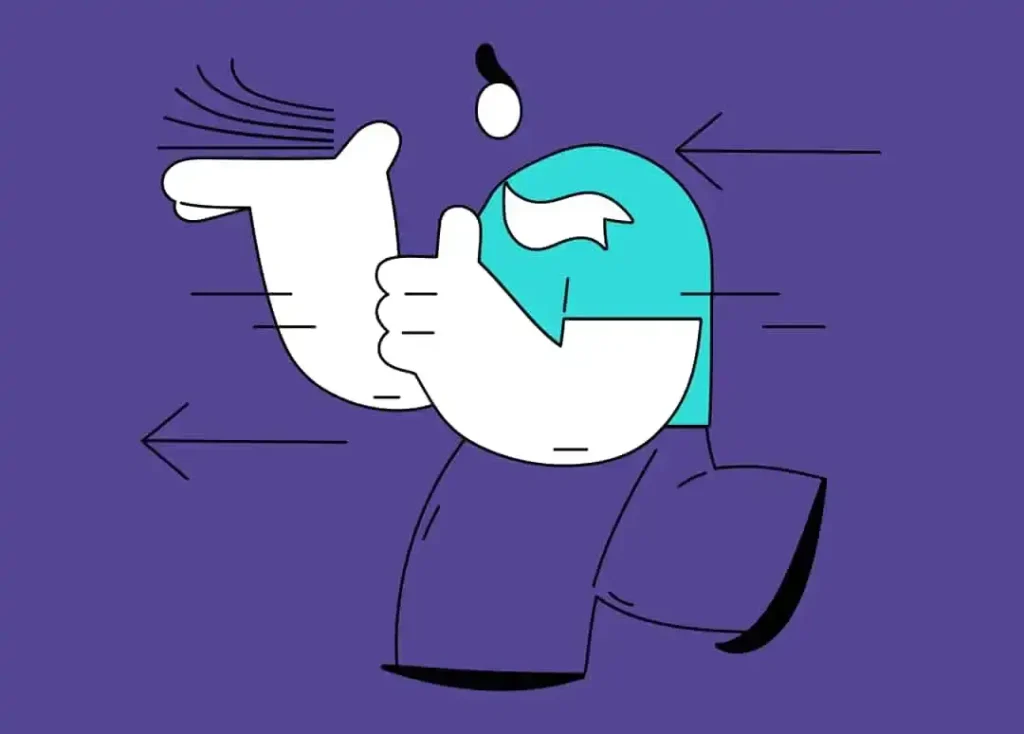
Conviction Is the Fastest Way Forward
Why Conviction—Not Pressure—is What Creates Real Organizational Speed
Every leadership team wants to go faster. Faster product launches. Faster decision cycles. Faster reactions to change. Just faster.
In a world where disruption is constant and expectations only rise, speed isn’t a luxury. It’s a lifeline. So companies try to engineer it. They compress timelines, layer on agile rituals, and ramp up accountability. They tighten the system, hoping pressure will create acceleration.
But here’s what we see again and again with executive teams under strain: Pressure creates motion. But it doesn’t create momentum.
When Movement isn’t Progress
Many organizations are in near-constant motion. Everyone’s busy. Meetings multiply. New initiatives are always launching. And yet, nothing seems to fundamentally shift. People are working hard. They’re trying. But something’s missing. Usually, it’s belief. Not in a philosophical sense. In a very practical one.
When teams don’t believe in the strategy, when they don’t fully trust their leaders—or the future that’s being painted for them—they don’t accelerate. They hesitate. They wait to be sure. They avoid risk. They play it safe.
And that hesitation? That’s what slows things down. Not tools. Not process gaps. A lack of conviction.
Belief is What Actually Moves People
We don’t talk about it enough, but belief is structural. It’s not about values posters on your walls or survey scores. It’s about what people carry into real situations. Like:
- Deciding whether to challenge a decision—or stay quiet
- Taking initiative without being asked—or waiting for approval
- Making a hard tradeoff—or kicking it down the road
When people believe in what they’re building—and in who they’re building it with—they don’t wait. They move. And that’s what creates speed. Not pressure. Not process. Belief.
What the Data Shows
It’s not just observation. The data backs it up:
- Only 23% of employees are engaged globally (Gallup, 2024). That’s a massive signal. Not of burnout—but of disbelief. When belief is missing, acceleration stalls.
- Trust in institutions—including business—has dropped below 35% worldwide (Edelman, 2024). Leaders are trying to go faster in an environment where people are skeptical by default.
- Organizations with high alignment and commitment are 3.7x more likely to be top performers (McKinsey). That’s belief, quantified.
- Companies with clear alignment make decisions five times faster, with half the effort (BCG). That’s what belief enables—speed without drag.
These aren’t marginal gains. This is the compounding effect of conviction.
What High-Belief Leaders Do Differently
They don’t just look at speed as a process challenge. They ask different questions.
- NOT: “Why aren’t we moving fast enough?” BUT: “What’s missing from what people believe?”
- NOT: “What do we need to push harder?” BUT: “Where is belief breaking down?”
- NOT: “What’s our cadence?” BUT: “Do our people trust the direction enough to move on their own?”
Because when belief is present, alignment happens faster. People move without waiting. And execution feels lighter.
From Internal Conviction to Market Recognition
What happens inside a company eventually becomes visible outside it. Shared conviction creates the coherence the market needs to understand what a company has become.
The market can only recognize, believe, and value what a company itself understands and carries consistently. When conviction is shared internally, that coherence becomes visible outside the company, too. When it isn’t, the fragmentation leaks out—sales tells one story, marketing tells another, and customers and investors piece together a version of the company that’s incomplete, or already out of date.
That’s the distance we call the Belief Gap: the space between the company you’ve actually built and the company the market is prepared to recognize, believe, and price. A lack of internal conviction doesn’t just slow decisions down. It widens that gap—because the market can’t believe a story the company isn’t carrying consistently itself.
It’s the same mechanism, inside and out. Conviction is what’s true inside the company. Emotional Impact is what turns that truth into something people can feel. Belief is what the market gives back once it recognizes what the company has become. Internally, that belief looks like speed. Externally, it looks like being understood, valued, and priced for what you’ve actually built.
So the choice we described above—pressure or belief—was never just an internal one. Build conviction inside, and eventually it shows up outside: in how investors describe you, how customers talk about you to their peers, and how quickly the market catches up to who you’ve actually become.
The Shift That Matters
You can keep optimizing for activity—more meetings, more urgency, more friction. Or you can build belief.
It doesn’t mean abandoning discipline. It means recognizing what actually makes speed sustainable. Because belief isn’t about being idealistic. It’s about being real with people, clear about where you’re going, and committed to making it worth their effort.
That’s what changes behavior. That’s what scales. And that’s what creates the only kind of speed that lasts.
–
We’re Emotive Brand, a brand strategy and design firm for product-proven B2B technology and AI companies. We help close the Belief Gap so companies become understood, valued, and priced for what they have built.