Overlay
Let's talk

Hello!

Five Surprising Brands That Embrace Emotion

Looking for a quick hit of strategic inspiration? A dose of oxytocin in brand form? We found five examples that are hitting the mark by moving people. Emotional connection for the win.

Over recent years, the rise of emotion has been undeniable. The following five brands—across diverse categories and including one of Emotive’s own clients— offer proof that the era of emotion has arrived. Can you feel it?

1. Unlocking the potential of those who advance the world.

Boston Consulting Group (BCG), global consulting firm.

Many brands claim to be human-centered, but few actually are. BCG’s succinct yet powerful premise—supporting the leaders who move us all forward—is inherently emotional and deeply human. And it’s refreshing to see that emotion and humanity is injected throughout the brand, even in how insights are presented.

Acknowledging the unique challenges of leadership today, and rather than preaching from on high, BCG presents expertise in a relatable and trustworthy way by inviting chief executives to “Hear from Fellow CEOs.” Their CEO Moments of Truth YouTube videos attract hundreds of thousands of views each.

The brand is also emotionally bolstered by fostering strong, ongoing relationships with past employees, referred to as alumni and considered part of the BCG family. BCG’s Alumni Program includes a learning library and events to connect current and past employees.

We get the impression that, through and through, BCG walks the walk in “unlocking the potential” of the people it serves and employs. Good feels all around.

2. Clean feels good.

Clorox, multinational manufacturer of consumer and professional products.

Clorox’s latest campaign, “Clean Feels Good,” pivots from the science of disinfecting to the emotional upside of cleanliness. They teamed up with a neurotech firm to measure and show how the everyday act of cleaning–far from a mere burden–is for many people a proven way to boost mood and foster a sense of wellbeing.

We notice that spot-on (or off) expertise, as seen in their online database of practical cleaning tips, is balanced with touches of emotion throughout the Clorox website, as in, “Follow our tips to save time, money and possibly the day.”

More than ever, Clorox positions itself as a health and wellness company that exists to help people thrive–not just kill germs. They don’t just grab attention by challenging expectations, they earn engagement and loyalty by highlighting a source of joy hiding in plain sight.

3. Powering the inclusion economy.

Katapult, leading omnichannel lease-purchase platform.

Spanning B2B and B2C, Katapult, an ecommerce-focused FinTech company is one of Emotive Brand’s clients–and an example of how feeling elevates brand in any sector.

With empathy and optimism, Katapult challenges the dreary status quo of retail purchase plans, dominated by predatory rates and gatekeeping via credit scores. A friendly, buoyant brand identity showcases a fresh point of view: Seeing the good in people is good for business.

For retailers, Katapult encourages openness to overlooked, unfairly excluded consumers. For shoppers, Katapult opens doors to major purchases, central to quality of everyday life but too often out of reach. We enjoyed the collaboration, and the chance to help level a playing field tilted for too long.

4. / Keep your options open.

Red Hat, leading provider of enterprise open source software solutions.

In an interesting twist, Red Hat’s recent marketing humanizes AI to show its potential flaws and differentiate the company’s offering. The result is a message that connects emotionally–as opposed to relying solely on the kind of forgettable AI technology proof points in which we are all now drowning.

The campaign ties back seamlessly to the compelling, central brand premise–creating better technology with open source. Rather than a bland functional claim, the concept of openness infuses the entire brand with purpose and feeling: Open source, open culture, open to possibilities.

As Red Hat explains on their site, “Red Hat exists not only as an enterprise software company but as a catalyst for change, built on the belief that open unlocks the world’s potential.” We appreciate the tight connection between the functional and emotional, a hallmark of the strongest brands.

5. Own the dream.

Rocket Mortgage, major online mortgage lender formerly known as Quicken Loans.

Rocket Mortgage’s recent rebrand is a dramatic example of leaning into the power of emotion. While homeownership is treated as a numbers game by most companies in the industry, Rocket has opened the door to deeper connection with prospects and customers.

They now show up with warmth, humanity, and recognition that what they offer is more than home loans—it’s the fulfillment of a deeply meaningful aspiration for most people. The brand shift is especially powerful in an uncertain economic climate, when many are doubting their belief in the classic American dream.

Visually and verbally, the new brand tone is clear, from a more approachable logo, simpler data identity system, and a voice of understanding and encouragement for customers making big financial decisions.

Even in small moments, Rocket finds ways to engage. The online application funnel feels helpful and human, like when they explain that “prequalified” is just “another way of saying ‘let’s estimate what you could afford.’” After all, in a lengthy transaction as emotional and momentous as buying a home, a little empowerment at each step likely goes a long way.


The Business of Transformation is Human

How we feel matters. It determines—and has the power to transform—how we show up in the world and for each other, and in the end, the type of impact we create. We see it in our work with Emotive Brand clients all the time.

The most rewarding part of strategic writing and design is not spotting our work in the wild—perched on grocery store shelves, splashed across websites, or looming large on billboards. It’s having the opportunity to change how people think and feel about their work. You know, that thing they spend most of their limited time on earth doing.

At Emotive, we get to see clients’ faces brighten as we reframe what their company and brand stand for, to illuminate higher purpose and uncover deeper meaning.

When the strategy and creative are right, it’s clear–because sparks of transformation flicker before your eyes. Client teams light up with new ideas to shape all areas of the business. Their energy level and ambition rise. Too many leaders say emotion is intangible. We know it’s palpable.

How people feel matters more than ever, and can tank or propel the success of brands and businesses. Here are three reasons why.

Humans now face constant change and uncertainty.
The seismic jolt of the pandemic keeps reverberating, alongside a push to get people back into the office. There’s the specter of layoffs, political division, and the high cost of living. With technology, epitomized by AI, progressing faster than humans can adapt, upheaval is neverending.

“Change leaves people and organizations feeling confused, vulnerable, and fractured at a time when resilience, cohesion, and collaboration are necessary to perform at the highest levels.”

—Harvard Business Review


People are exhausted by constant change. So if you want to spearhead transformation, you have to give them something worth caring about, something they can feel and believe in.

People are fed up with corporate bullshit.
The scourge of shrinkflation. Greenwashing. Planned obsolescence. Employees’ and consumers’ tolerance for being deceived is depleting. That’s why the number of B Corps and Benefit Corporations keeps climbing, along with the popularity of de-influencers and the “right to repair” movement.

“During the challenging year of 2020, only 4.5% of B Corps failed, compared to 12.5% of American businesses overall.”

—Federal Reserve Board


Getting ahead of these issues, instead of waiting to be exposed and called out, is not just the right thing to do. By building trust and loyalty with employees and consumers, a proactive approach can save and sustain businesses.

Humans need more than products and paychecks.
Your brand or organization has a golden opportunity to lift people up at a time when all of us are fighting battles that wear us down. Like navigating education and healthcare systems that fall short, being squeezed as part of the sandwich generation, or needing purpose at work but struggling to afford soaring rents as a Gen Zer.

Retention, loyalty, and growth—the aims of transformation programs—are best served through genuine connection and alignment with how people feel and what they care about.

“The human emotions of people working at the centre of a transformation play a pivotal role in its success or failure.”

—EY and Oxford University report


At Emotive, we leverage emotion to transform brands and businesses in ways that contribute, even just a little bit, to a better world for people. No mere paycheck can compare.

Beyond Trends: 2025’s Top 5 Paradigm Shifts for Brands

More is possible for, and expected from, brands than ever before. The role of emotion in heightening the quality of connection has reached a tipping point, pushed over the edge by hyper segmentation, AI, demographic shifts, and ever-increasing competition.

Emotion and E-ROI will dominate brand strategies in 2025—and it’s mission-critical to understand the difference between them.

  • Emotion is the energy that sparks connection—how a brand makes its audience feel.
  • E-ROI (Emotional Return on Investment) is the measurable value brands gain when they successfully leverage emotion—turning connection into loyalty, brand equity, and revenue growth.

Emotion drives action. E-ROI measures impact. Brands looking to lead in 2025 must embrace both. Here’s how the emotional landscape is evolving and what it will take to win.

1. Emotional Personalization Will Fuel Authentic Engagement

By 2025, generic approaches will be dead on arrival. The brands that win hearts and market share will have outgrown personalization based on demographics or purchase history. Instead, they’ll own emotional personalization, using AI and emotional intelligence (EI) tools to anticipate and respond to customer values, desires, and real-time emotions.

Brands that embrace AI-powered personalization report 26x higher year-over-year revenue growth than their competitors​.


Nike and IBM have led the charge, mining emotional data to craft stories and experiences that resonate with customers’ aspirations. The SNKRS app powers product customization while collecting customer insights that Nike uses to shape brand interactions, and IBM’s Watson customizes customer service responses based on mood and context cues. 

In 2025, expect more brands to meet customers where they are—emotionally and situationally—making each interaction feel human and deeply personal.

2. Purpose-Driven Narratives Will Be Non-Negotiable

With Millennials and Gen Z holding the reins of purchasing power, demand for purpose-driven brands will intensify. Brands that tie their purpose to real societal change will earn the highest E-ROI. Social impact won’t be a bonus for consumers—it will be a core driver of emotional connection and brand loyalty.

Research shows that emotionally connected customers are twice as valuable as highly satisfied customers​.
—Harvard Business Review


Brands like Allbirds and Patagonia have shown how purpose, when woven into every aspect of the business from sustainability efforts to employee culture, can drive both emotional engagement and financial growth. 

By 2025, purpose will be the cost of entry.

3. Brands Will Balance Data with Emotional Intelligence (EI)

Data has been king for a decade, but 2025 will herald the rise of EI as a business asset. Brands will still rely on data, but with a more human lens that balances quantitative insights with the subtleties of emotions. Those who can decode emotional data will deliver experiences that feel intuitive and connected.

Companies ranked highly for emotional intelligence generate 20% more revenue growth and 18.3% higher share price increases​. 
—Capgemini


Brands from Dove to Salesforce are demonstrating the superpower of EI–from challenging beauty standards in ways that meet deep emotional needs, to detecting consumer preferences and sentiment with AI to tailor marketing strategies in real time. 

Such strategies will reverberate across B2B and B2C markets throughout 2025, benefiting both companies and customers.

4. Emotion Will Drive Innovation

By 2025, emotion will influence more than just marketing—it will become central to product development, customer experience, and organizational culture. Brands will embed emotional intelligence in their innovation processes, ensuring new products resonate emotionally from the start, with responsiveness to needs as they evolve.

“We must make a product or service that delivers in the person the emotions we care about—it’s an art.”
Don Norman, UX Design Pioneer


This shift is evident in Adobe’s creation of a community in which customer feedback drives product updates. Not only do customer concerns and input guide improvements, but the community has forged emotional ties resulting in more repeat buyers and less churn. 

In 2025, this level of connectivity will no longer be exceptional, but expected.

5. Emotional Impact Metrics Will Define Success

As emotional impact takes center stage, traditional metrics like click-through rates and sales will no longer be enough to compete. Brands will need new KPIs focused on emotional connection, loyalty, and long-term brand affinity.

“The ability to recognize and use emotional data at scale is one of the biggest, most important opportunities for companies.”
—Deloitte


For leaders spearheading change, the ability to gauge emotion will determine outcomes of transformation programs.
EY found that traditional KPIs are insufficient, lagging indicators, and that the behavior and emotions of the people are better predictors of whether a transformation program is on track. 

In 2025, internal and external initiatives will lean on emotion-driven metrics that precede, and therefore can help guide and realize, business impact.

E-ROI: The New Currency of Brand Success

The ascent of E-ROI in 2025 represents tantalizing opportunity–and potential peril. Brands that fail to invest in emotion as a strategic asset will fall behind. Those that tune into emotion will not only move their organizations forward, but also entire markets and even movements. 

Visibility and functionality are now table stakes. To lead, brands must evoke, engage, and elevate every interaction with emotion as a catalyst for connection. The meaningful and enduring impacts they create for their audiences will translate into transformation, innovation, and growth for their businesses.

Leading in 2025 means leading with feeling.

Rebranding in 2024? Move Fast to Go Slow.

As 2023 winds down, odds are you’ve already set your goals for 2024 and are taking these last couple of weeks to tie up loose ends and get ready to take a running leap into Q1. But before you turn out the lights on the year, we have one piece of advice: if a rebrand is something you’re considering before the end of Q2, the time to start is now.

“Starting now” doesn’t mean kicking off the project. But it does mean you need to socialize the endeavor with your leadership team, clarify the goals, secure budget, identify internal teams and resources, define the brief or create an RFP, find the right agency partner that can deliver the work based on your timing and budgets, and get all the appropriate agreements in place. All of this takes time—time you don’t want to steal from the strategic work that goes into the rebranding process.

Make the time to go slow
A rebrand is never a cookie-cutter project (and beware of those who claim otherwise). Because brand impacts every part of your organization, the process is as much about building internal alignment as it is about creating a new story, identity, or positioning. You need to make time to explore the implications that moving in different directions can have on your business. You need to create space to surface philosophical differences and provide the frameworks for getting people on the same page. You need to understand what different teams require of the new brand and how they can put it to use. The more deeply you can dive into these conversations, the better chance of seeing the essence of your company come to life in stunning language, arresting design, and experiences that set you apart.

When you need it yesterday
Over the years, we’ve seen the New Year brings a desire to make things new, and 2024 will be no different. Maybe a competitor that jumps into January with a refreshed brand or a story that tilts the playing field away from you. Maybe a new opportunity asks you to rethink your positioning or dial up your differentiation. Maybe a new round of funding translates into headcount and the need to elevate your employer branding.

While you can address things like product positioning or messaging updates with short-term solutions, bigger brand-related conversations beg for deeper consideration. You can certainly shore up your website copy and discuss new features and functionality without needing a brand overhaul. But when your company is ready to go to market in a new way, it’s time to take a deep breath and start planning for a rebrand.

The cost of delay
The longer you wait to get the gears in motion, the harder it can be to reach your organization’s goals. Sales kick-offs, trade shows, customer and investor roadshows, and other activities can put your project on the back burner. And, like someone showing up to the Oscars in an outdated outfit, you’ll be missing opportunities to attract the attention you need to grow.

Here’s the good news: without making any big budget outlays, there are steps you can take right now to ensure you’re in control of the timing for when you update your brand:

Lay the Groundwork
Start the internal discussions with your key stakeholders to build alignment on goals, expectations, timing, and budgets.

Identify an Agency
Research potential agencies that align with your business, your vision, and your values. Look for an agency that knows your space and has worked with companies at your stage of growth.

Prepare an RFP or Creative Brief
Detail your branding objectives and requirements, including timelines, key deliverables, events you want to leverage for a brand rollout, and your desired budget. The more complete the story you tell about what you want, the easier it will be to find an agency that can deliver.

Select an Agency
Meet with your top agencies, review their proposals, and meet their teams. A branding project will span months, and chemistry is crucial to ensuring good communication and a positive engagement style throughout.

Procurement & Planning
Onboarding an agency, finalizing SOWs, and scheduling planning sessions all take time. Depending on your organization’s procurement process, account for this time accordingly.

Preparing for Kick-Off
Gather all the necessary materials that will help your agency hit the ground running, including documents, product demos, and research. Identify key stakeholders early to avoid project delays during interview scheduling.

If you are planning any brand initiative in 2024, we can’t overstate the importance of starting the process sooner rather than later. When the process gets underway, you’ll undoubtedly encounter challenges you hadn’t predicted and twists and turns that you’ll be grateful to have some extra time to address.

If you’re contemplating going on a rebranding journey and are looking for guidance, Emotive Brand is here to help. Let us know how we can help you get ready to jump into the process.

Q&A with Sarah Cincotta of Aperian About Rethinking the Brand of a DEI Pioneer

As the DEI category grows larger and new entrants fight for attention, it can be hard for companies to identify the right partner for their journey of creating an inclusive workplace. Founded in 1991, Aperian is a pioneer in helping organizations develop culturally diverse teams that deliver measurable value. Trusted by over half of the Fortune Global 100, their experience serving over three million learners has driven their evolution into a data-driven, product-led company.

Emotive worked with the Aperian leadership team to redefine the company’s brand as it embraced a new strategy, refreshed its values, and developed a new visual and verbal identity to further differentiate its offering in a crowded space. As they go to market with an updated brand and story, we had a chance to chat with Managing Director of Global Marketing Sarah Cincotta to get her insights on the process of rebranding an industry leader to accelerate its growth.

Emotive Brand: There was a lot going on when you undertook this work. Your two co-founders were stepping back after decades of work to build the brand, and your two co-presidents were stepping up to face the challenges of competing in a rapidly growing space. Why was this the right time to re-examine your brand? 

Sarah: The DEI landscape has really exploded over the last few years, and every indication is that it will be a growing part of the corporate culture and governance landscape going forward. This has attracted a number of new competitors to the space who are aggressively building their brands. We found that even though we have longevity and heritage in this space, our message was getting drowned out. One of the biggest assets of being an early leader is that a significant portion of our business historically has come from client referrals. But we got to the point where we were seeing business plateau, and we knew that to keep pace in this rapidly growing landscape, we needed to reposition our brand.

Emotive Brand: Aperian’s go-to-market strategy is also evolving to match the dynamics of the marketplace. How did that play into the work of updating your brand?

Sarah: Aperian offers both live training and asynchronous online learning. As our company evolved, clients began to associate the Aperian Global brand with live training and the GlobeSmart brand with our online products. The market wasn’t always aware of the connections between our offerings, and even internally we struggled to blend those sides of the business. We’ve also added other products to our portfolio during our 30 years in business, and we used the brand development process as an opportunity to unify all of our offerings under a single umbrella.

A big part of this process was building an identity around Aperian that could speak to our existing customers as well as help us build awareness in the SMB segment. With our go-to-market strategy shifting to a product-led approach, our goal was to develop a brand that could deliver a unified message across all segments. By simplifying our brand architecture, we can go to market with a suite of products rather than point solutions to meet the needs of different customers. Our new brand story also gives our sales team a better starting point for engaging customers in our portfolio. And as we get more comfortable leaning into the emotional foundations of our brand, we’re already seeing how our brand is opening the door for new types of conversations with the people we serve.

Emotive Brand: What advice would you give other companies, regardless of industry, that are operating in an increasingly competitive market?

Sarah: A great exercise would be to see how difficult or easy it is for employees across the business to articulate what makes your company different and better than everyone else. At Aperian, we had the problem of having too many reasons we could claim we were different, which is not a bad thing, but we found it prevented us from rallying our brand around a single idea that we stand for in the hearts and minds of our customers.

Emotive Brand: So what is the idea that you rallied around?

Sarah: Simply put, it’s the butterfly effect: how one small change can cause ripples that create an outsized impact. We call this The Aperian Effect, and it gets to the heart of how pursuing our mission can change a workplace, an organization, and the world for the better. After the team landed on this idea, we discovered that back in 2016, Ernie, one of Aperian’s co-founders, sent a state-of-the-union email to employees that referenced this same idea. It was a confirmation that in the process of developing a brand for our next chapter, we were staying true to the DNA that makes Aperian such a unique company.

Emotive Brand: Before partnering with Emotive, your internal team had done some work to update its brand platform. What did you discover while working with Emotive? 

Sarah: Our previous work helped us align on the language of our key messages, but what was missing from our work was the emotional piece. Focusing our team on how we want our customers to feel opened up entirely new conversations about where our brand could go. Our work is intrinsically emotional, but getting intentional about creating a specific emotional space—and having the confidence to lean into it as we go to market—has made a big difference in how we’re building relationships with customers.

Emotive Brand: Aperian is blessed with a dedicated group of people who have been with the company for a long time, and a new brand represents a significant change in how a company sees itself. How did you onboard people into this process? 

Sarah: There is a good reason why one of our values is, “Stay curious and keep learning.” This mindset creates the perfect opening for communicating openly and transparently about the motivations behind undertaking this work. Our management team hosted bi-monthly coffee chats where people could bring their questions, which allowed employees to learn more about the thinking that went into the new brand. We also made it clear that this was an evolution of Aperian, not a dramatic shift. And by educating our teams about brand and letting them see the iterations of the work that helped us land our new identity, they could see the care and consideration that went into the process. We have a new logo and a new color palette, which is great, but our employees also understand the why behind them.

Emotive Brand: As part of this work, the team also refreshed the language around the company’s values. Why was this important to do? 

Sarah: The rebrand could have fallen flat for our employees if we hadn’t taken the time to reflect on our values. In the same way that we refreshed our brand to support our changing strategy, we agreed that our values had to shift to align our culture to our aspirations as a company. So we undertook a process to preserve the ideas core to our existing values, but to evolve them to shape the behaviors that would take us forward as a company. We articulated our new values using language that is more action-oriented, measurable, and emotional, and we’ve found this has made our values more relevant and accessible. Their language is showing up in everyday conversation. Teams are using them to ask better questions about how they can contribute. And across the company, we’re seeing how they can elevate our expectations about how we show up for each other.

Emotive Brand: Now that you’ve launched your new brand, what initial reactions have you experienced? 

Sarah: The big takeaway from me, internally and externally, is that in creating a better articulation of who Aperian is and what makes us a different kind of company, we’ve unlocked a new language for sharing our story with the world. It’s a matter of simplifying so we can amplify, which in a crowded market makes a tremendous difference. We’re getting ready to roll out a campaign, and just knowing that we’ve found the right notes to hit gives us confidence that it’s going to make an impact.

Finally, the fact that our co-founders, Ted and Ernie, believe in the work we’ve done is the most important endorsement. We’re stepping into the future in a way that honors our past, which is critical to the customers and employees alike who have made Aperian a company unlike any other.

Welcome to the Generative Generation

Generative AI is all the rage these days. While it feels like something brand new, this technology has been in the works since machine learning’s generative models emerged in the late 2000s. The use of advanced mathematics to generate content has always been part and parcel of a developer’s mindset, but the tools weren’t widely available. Now, the doors to Generative AI have blown wide open with ChatGPT, Midjourny, DALL-E, Adobe Firefly, AlphaCode, Bard, and GrammarlyGO, among others, and Apple’s impending release of Ajax that will no doubt inspire the cherubs to blow their horns and creatives everywhere to seriously rethink their workflows.

But just how much will Generative AI change the way brands are built and expressed?

The goal of any creative discipline—from painting to writing, music, photography, dance, theater, etc.—is to bring a degree of order (and with luck, brilliance, magnificence, wonder, and awe) that helps us make sense of the ever-expanding chaos we live in. Creativity highlights the emotions and meaning that remind us what it means to be human. It tells stories that help us remember. Now, with Generative AI, the tools of creative expression are changing. Anyone who experienced the early days of desktop publishing just shrugs at this statement. We’ve gone from the harpsichord to the Telecaster, from the printing press to WordPress, and from oil painting to the Bored Ape Yacht Club.

But here’s the thing: the impact of AI tools goes beyond the typical 10x better, faster, louder, and cheaper of what we’ve seen before. In fact, we don’t really know how powerful Generative AI will become. Algorithms, rather than creators, will govern the pace and scale of generated content—without regard for the quality or impact of what’s being generated. This wonderfully titled New Yorker article, “Chatbot is a Blurry JPEG of the Web” explores how the Xerox-of-a-Xerox effect may soon be in full effect as we fill the Web with AI-generated content (lossy articles and images), which the models don’t distinguish from hand-crafted content. It all goes into the same digital soup pot, with subsequent generations of AI-generated content becoming further and further removed from their Platonic ideals. A possible outcome: original creations that can surprise and delight will become a rarefied commodity as we spiral into derivative content born from blurry logic and rife with hallucinations. (At last, job security for fine artists!) Generative AI will undoubtedly lower the price of mediocre content, but at what cost to the people who consume it? (“Big Macs for Life” falls into the curses column in my book.)

At Emotive Brand, we’ve been conducting research, convening working sessions, and taking the leading Generative AI content creation tools for various test drives in our studio. It’s a given that Generative AI is going to play a role in how creators create going forward‚ in the same way that Illustrator, Photoshop, and WordPress gave us the ability to accelerate workflows and prototypes faster than ever before. But we’re not ready to huck into the Corbet’s of Generative AI without understanding its power, limitations, risks, flaws, and the basics of how it works. To that end, we’re exploring how these new tools can accelerate our ability to build brands that are authentic, human, and grounded in emotion. Can algorithms help us achieve that aim? We’re game to explore this question and shape an informed perspective.

The world is just at the beginning of the Generative Generation. The technology will inevitably improve. Its applications will undoubtedly grow more munificent and nefarious alike. And as we filter its uses through the lenses of emotion, authenticity, and originality, we’ll keep you posted on what we’re learning.

Emotive Brand is an Oakland-based brand and design agency.

Q&A with Eric Futoran of Embrace about Building a Brand to Lead the Mobile Revolution

Embrace is a company dedicated to unlocking the potential of mobile technology. As companies envision new ways that mobile can transform the ways people live, work, and play, they are asking their mobile teams to deliver mission-critical experiences that are increasingly bold and ambitious. Developers need help managing the growing complexity of what they build—so they can dream bigger about the role mobile plays in their future—which is what Embrace helps them do.

Emotive worked with Embrace Co-Founder and CEO Eric Futoran and his team to redefine their brand and align their organization on the next chapter in their growth story. As they prepared to launch the new Embrace brand, we had a chance to sit down with Eric to get his insights on how the process helped bring his team together to bring a new story to market.

Emotive Brand: You spent a few months going deep into the why, how, and what of Embrace, with a lot of healthy debate about how to tell the Embrace story. What are some things you learned along the way?

Eric: As a founder, I’m so used to thinking about the long-term vision for the company and how we can power the incredible promise of mobile. And in some ways, this visionary thinking is too far out for people to map to the work in front of them. A lightbulb went off after a conversation with Emotive about how to frame the role our brand needs to play over the next two years. It made the goals much more practical and a lot easier because it didn’t have to play out the brand vision in such detail. And to be honest, I think it made the result more exciting because we could see how it could impact the ways we go to market. While mobile disruption will take five or ten years to realize, not every company thinks that far out. The most significant personal learning was to shrink my timeframe and be okay with that.

Emotive Brand: Throughout our work together, you continually encouraged us to swing for the fences about where we could take the brand. What were your instincts telling you about creating a bold story?

Eric: My thinking was that we needed to push ourselves out of our comfort zone. For all sorts of good reasons, we are focused on the weeds of what’s in front of us. But you don’t build a brand for today. A brand needs to be aspirational by definition and build the bridges between today and the better future we’re all working to create. If we had stayed too much in our comfort zone, we would have created a brand that was good for us today but not tomorrow. By learning how to get comfortable operating outside our comfort zone, we recognized new possibilities for where we could take our brand.

Emotive Brand: Building a start-up brand in a newly forming category brings several challenges in building awareness, understanding, and advocacy with developers. How did you see emotion as part of the equation in bringing this all together?

Eric: When you connect with the brand, there’s an implicit connection that goes beyond the functional ways you will use the brand. For example, when you look at the Apple logo, it has nothing to do with what they do and everything to do with setting the emotional context for their offerings. When you’re talking to developers, I think it’s crucial to think of them as people with goals that inspire them and challenges that give them headaches. Developers are so used to seeing the same set of messages and color palettes and comparisons that they feel like they’re being sold to rather than a brand trying to build a genuine connection based on how well they understand their experience. Our goal is to make developers feel empowered by giving them technology that meets their needs and confident that they have a great partner in Embrace to help them achieve their goals. Emotion allows developers to recognize their aspirations and pain points in our brand, which creates a very human connection.

Emotive Brand: As someone who has successfully brought two start-ups into growth mode, when do you think it’s the right time to invest in brand?

Eric: I’ll preface this by saying I hate this answer—it depends. Everyone has a different product and a different strategy. For us, we’re trying to do something very different in our space and cut through a lot of noise that is out there. So brand is an important tactic to tell a unique story that keeps us from getting lumped in with companies we don’t compete against.

If you think about the other end of the spectrum, where 80% – 90% of SaaS products live, they drive differentiation based on doing something slightly better or cheaper than their competitors. These companies typically use brand to create a different emotion rather than paint a bolder vision. The majority of SaaS companies are highly iterative, which Embrace is not. We built our company to be a disruptor.

Emotive Brand: We started working together when there were signs of a weakening economy, but you invested in your brand when others were holding back. What were your reasons to keep pushing forward on the brand front?

Eric: A lot was the practical nature of where we are as a company. We have a best-in-class product with a well-defined product-market fit, but no one knows about us. Our best move in this situation is to lean into brand and marketing initiatives to fuel our growth. Until now, we’ve underinvested in brand because we never felt the pain because the economy was on fire and people were less cost-conscious. The rising tide lifts all boats. But now, as the tide is wavering, we need to make sure we’re positioned to compete in any market condition. We’re still growing, but our brand activities give us the ability to grow faster.

When VCs tell companies to lengthen their runways, I think that’s good advice for seed-stage companies where money is the greatest asset instead of time. For a growth company, time is of the essence because you’re now measured on what you achieve or don’t achieve over time. To reach our potential, we need to increase our awareness, and brand is a key component of that.

For a growth company, time is of the essence because you’re now measured on what you achieve or don’t achieve over time. To reach our potential, we need to increase our awareness, and brand is a key component of that.

Emotive Brand: As a CEO, you were deeply involved in this process. What were the pluses and minuses (if any) about a founder being so involved?

Eric: In many ways, it depends on the founder. We needed to make a bold pitch based on where Embrace is as a company. And for that to occur, we had to get out of our comfort zone. I think I implicitly had to be part of that initiative because it is really hard to ask a head of marketing or sales or product to put themselves out on a limb and take that risk without the founder being part of it. I’m not a marketer by any means, but I know the power of good storytelling. So from an ideal perspective, the founder and CEO should 100% be part of the process to ensure the brand’s story aligns with the bolder vision for where the company is heading. You’re not just telling the story of this moment in time—you’re telling the story of the people and the journey as part of that company. And so, if I hadn’t been as involved, we may have lost some of the potential of what the brand can do and the impact it can create.

Emotive Brand: As part of this work, we worked with you to develop a Growth Manifesto that tells the story of how you plan to grow over the next two years and beyond. How did this help your team connect the dots and align around the strategic pieces of your business, product, and GTM strategy?

Eric: It helped build a bridge between the near-term goals for driving awareness and our longer-term vision. When we started writing the Manifesto, the combination of the two came together. We were able to frame what we do in the five-to-ten-year vision of how mobile will transform the world and get people excited about this future, and then we made it real by focusing on the next two years and what will be required. The two horizons don’t have to be mutually exclusive.

But the team is still digesting the Growth Manifesto. When rolling out anything new, you need to create a drumbeat of communications and experiences. I have an -ism on this called the Rule of Three: give people the information in three ways and three different times. That’s what we’re doing with the manifesto so that it becomes part of our everyday thinking.

Emotive Brand: Because we’re Emotive, we need to ask you about feelings. Do you think feelings and emotions play an essential role in the B2B space?

Eric: 100%. Our customers are people. The people they serve are people. I think a lot of businesses forget that. We’re a very customer-first, customer-centric company because I truly believe it’s the right way to do business. Rather than B2B, we’re Human-to-Human. Retention is king for all SaaS companies. In addition to having a great product, you need to treat your customers right because they are making a bet on you. There will be bumps in the road, but they’re betting both on your vision and your ability to support them when the product isn’t working the way it’s supposed to, and they need you to take action. The only way you retain customers is by treating them like partners, like people whose success you genuinely care about. That’s the only way you’ll build a relationship that can weather the storms that arise. It’s not commonly expressed in the B2B space, but business is all about leading with emotion.

Infusing a Brand with Big Heart Begins with Big Thinking: How Small Design Cues Can Generate Great Big Feels

“We need to make our brand feel human. It needs to reflect our people and our customers. We need to tell a human, emotive story.”


This is how a lot of our conversations about brand design begin. If we were designing for packaged goods that sit on a shelf and give people a tangible representation of your brand, we’d have a well defined experience to address. But most of our work takes place behind the scenes in the B2B and tech space. There are no shelves or stores mediating the process, no physical objects or packaging. There’s sparse or no direct interaction with the end-user. And the technology itself is invisible which increases the challenge of crafting a bespoke visual identity that evokes emotion.

Curating a distinct visual style is table stakes when developing design systems. But we’ve seen that in B2B branding, sometimes the smaller, more nuanced design moves can transform a smart visual identity design into a deeply evocative brand that evokes just the right feelings. Because these design moves don’t hit people over the head, they may not fully register at first glance, but over time, they shape the response people have to a brand.

A sense of (e)motion

Motion elevates the game. While static logos aren’t going away, just about every brand needs to move in some way, shape or form—whether it’s a dynamic logo or a kinetic design system that pushes the limits. And it’s often the little moments that spark delight—the sudden blink of a circle, the anthropomorphic smile in a lowercase ‘e’, or a subtle twinkle of light to punctuate a moment in the story. It’s these moments that draw people deeper into the brand story in the same way that physical packaging might speak directly to a consumer with an elegant serif font or bespoke illustration.

Our recent work to rebrand Katapult—an AI platform behind the e-commerce scenes that gives customers a fair way to pay for their purchases online—was an opportunity for our team to bring all the heart, feeling and optimism of the customer to the forefront of the brand. Sure, the photography needed to capture the heart and goodness underlying the brand, but we had to go deeper. So we used their name as our launching-off point, or catapult, if you will. Rather than trying to force all of our storytelling into a logo symbol, we crafted a wordmark that evokes the feeling of the human hand signing for a bill of goods. That calligraphic sense of motion led our team to develop something more emotive than just a symbol—a brand feeling of being uplifted and elevated. This feeling—which came to be known as “The Bounce”—comes through at every turn, from the upward curve that literally bounces off-screen, guides storytelling in infographics, or connects images, words and ideas together. Ultimately, “The Bounce” became more than a visual component—it became a deeply felt personality trait of the brand—and something the client could really get behind as an emotive representative of the brand, something much greater than a traditional logo symbol.

Sonic branding

Just like the barrage of visuals that we experience every day, our world is filled with sounds (a lot of it noise). In addition to motion, sound has a similar capacity to evoke feelings and brings another dimension to what a brand—and more specifically, a logo—can do. Sonic branding adds a richness to the brand experience, often creating a more bespoke and lasting imprint on how you experience (and recall) a brand. The Disney+ logo that introduces their content is a good example of a small moment that adds a big feel to how you interact with their identity. Now, it may be that I’ve seen/heard their identity more times than I care to count while watching with my 7-year-old, but there’s no denying how seeing AND hearing that magical beam of light swoop over the wordmark makes a deeper impression. It puts viewers into a state of curiosity and preparation for what’s about to come on screen. The ability to generate that lean-in feeling is a mark of a truly successful logo experience.

Our recent rebrand project for Pindrop included a sonic dimension to the brand. Because Pindrop is a pioneer in the voice technology space, creating a sonic brand was a strategic imperative. It was exciting to work with our partners at MusicVergnuegen to craft an audio component that brought Pindrop’s invisible, future-forward technology to life with a sound of a safe unlocking. Similar to Disney+, it’s hard not to smile when their logo symbol transforms and resolves on an audio crescendo. It’s the little things that often make the most impact.

Design needs to solve problems and deliver on the goals of the client but also has the great potential to unlock new ways of seeing, hearing and experiencing a brand. See (and hear) more of our work here and let us know if we can partner together to help solve your branding challenges.

Telling Your Story of Growth: The Power of a Strategic Narrative

One of the most important goals of a brand is to drive growth. Focusing a start-up on carving out market share. Positioning a fast-growing tech company to lead its category. Providing a foundation for product or portfolio innovation as a company seeks to reach new audiences. Or helping a global corporation expand its footprint into new geographies. Whatever your aim, brand can accelerate results.

But one of the biggest (missed) brand opportunities is engaging individuals in your organization to see their role in creating the future. When growth is a generic goal, people can assume that someone else is leading it. Disconnected from purpose or vision, growth can feel like a performance driver that serves only the goals of stakeholders. For companies to grow sustainably, positively, and strategically, people in the organization need to feel excited about what growth brings. 

The key to framing growth for your organization is making sure people see business as a process, not an entity. No matter where you are on a growth trajectory, success depends on behaving more like an organism than an organization—continually adapting to changes in the marketplace, the industry, the economy, and the culture. But when change and uncertainty prevail, most businesses are poorly equipped to communicate this distinction to their employees. Conventional objective-setting tools tend to be reactive rather than responsive. And typical brand building blocks tend to define what’s come before rather than guide people to consider what lies ahead.

A new approach for engagement

Emotive has a different approach to helping businesses fulfill their greatest ambitions. Growth is the goal. Emotion is the strategy.

When clients need to realize important outcomes, we work side-by-side with executive leaders to co-author a strategic narrative of how—and why—they want to grow. We call this a Growth Manifesto, and it serves as a powerful tool for cutting through the noise of function-specific goals, objectives, KPIs, and OKRs to make business and brand more emotionally relevant to the people in an organization. It connects major initiatives—corporate strategy, product, go-to-market, brand, people & culture—in a single, coherent narrative that aligns everyone behind the promise of the brand and the actions required to support it. 

Why create a strategic narrative?

Because narratives are fundamental to how human beings share meaning. Stories have the power to move and transform people both intellectually and emotionally. Unlike a traditional plot line—which tends to be self-contained with a beginning, a middle, and an end—this narrative is open-ended. It asks people to see themselves in the situation. It calls on them to imagine what they can do to pursue a higher purpose. It gets people into action by helping them understand the role they need to play on the journey ahead. 

Why do you need a Growth Manifesto when you have a business and brand strategy?

How often does your organization engage in substantive dialogue about what lies ahead? Our experience is that growth conversations begin in past actions, which can be limited by strategies that communicate what you already know—or what you’ve already got—rather than how you intend to do business tomorrow. We also see many organizations that undermine success by planning in silos, despite their best efforts at cross-functional thinking. (Can a marketing team develop an effective go-to-market plan in isolation from the deep thinking poured into a product roadmap? Nope. But it happens all the time.) And a “set-it-and-forget-it” mindset often tanks the desired effect of corporate mission, vision, and values statements. 

The Growth Manifesto does three important things:

  1. It establishes a clear point of view that will influence, guide, and help create your organization’s future. This isn’t a PR exercise. This strategic narrative will have an impact only if it’s deeply felt and true to your business culture. It requires expanding your perspective beyond the products or services you offer, connecting your brand to the broader context of your customers’ lives and to their aspirations.
  2. It ties everything together. All businesses, whether big or small, have multiple critical initiatives going on at any given moment. If the narrative about how they connect is haphazard or unintentional, people will start quilting their own. The result is multiple, individual narratives in pursuit of different end states—in other words, brand confusion.
  3. It creates structure, not stricture. For employees to be truly invested, your narrative must invite some level of co-creation and adaptive thinking. You must give everyone the tools and direction they require to do their jobs well, without being so prescriptive as to limit their tactical freedom to execute. You must ask every employee to use their imagination as they help build and reinforce your brand. 

The Growth Manifesto isn’t meant as a one-and-done alignment activity. It’s an integrative tool that sets a deliberate direction for your business at a given moment. It’s intentionally designed to flex in response to change. To be revisited and updated over time. To adapt in the same way that your business must adapt to the world.

We know that as competition intensifies and companies experience mounting performance pressure, time horizons tend to shrink and most organizations adopt tunnel vision to focus on their most immediate needs and concerns. The Growth Manifesto allows everyone across your business to keep their heads up, with eyes fixed on the horizon, holding both near-term and long-term goals in clear view. More than just selling products, or seeking this quarter’s profitability, a clear strategic narrative gives people the ability to see, believe and participate in creating a future that they know is not only possible but necessary.

Challenger Brands: Design that Disrupts

Challenger Creative

This post is the last in our three-part series on challenger brands. You can read a general primer to challenger brands or a deep dive into B2B challengers right here.

Previously, we chatted about the power of adopting a challenger mindset, how to compete against your category, and what the B2B world can learn from B2C disruptors. In these examples, most of the strategies were internal. It was a question of knowing how to recognize the pressure for change, creating a shared vision, having the capacity to execute, and building out a realistic work plan.

But still, the question remains: what does this actually look like in the real world? Today, we’re going to dive into some examples of challenger brands that use design to disrupt. While there’s no one definition for challenger creative, you tend to know it when you see. Most recently, it’s an aesthetic that incorporates clean branding, catchy names displayed in modern fonts, bright pops of color, and sleek packaging. It’s unapologetically bold, playful, and unafraid to subvert the expectations of the form. It’s a design that knows how to transform positives into negatives and creates a lasting impression.

Thanks for the Warm-Up

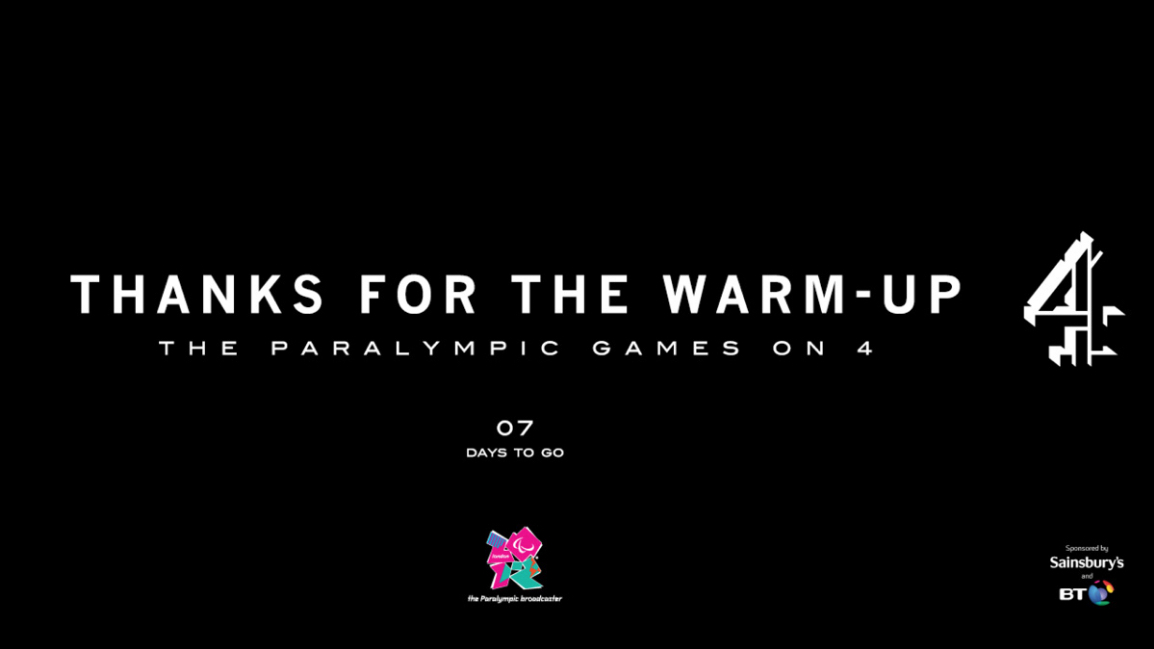
Sometimes you’re fighting against the market, and sometimes you’re fighting against people’s perceptions. From a marketing and viewership point of view, the relationship between the Olympics and the Paralympics is a contentious one. As we all know, the Olympics airs first, and garners much more attention and ad-budget. So, how do you respond when everyone thinks of your offer as secondary?

With a bold commercial that repositions the Olympics as merely the “warm-up,” this commercial asserts that the Paralympics is where Super Humans do battle. Even the way the commercial starts—leading the viewer from the firework show to a tunnel underground—demonstrates that this is an alternate, grittier world we are entering. It sets the tone for the whole games. Anyone can run on two feet—come see a real show.

Challenger Brands Design that Disrupts Paralympics

The Perks of Being a Couch Potato

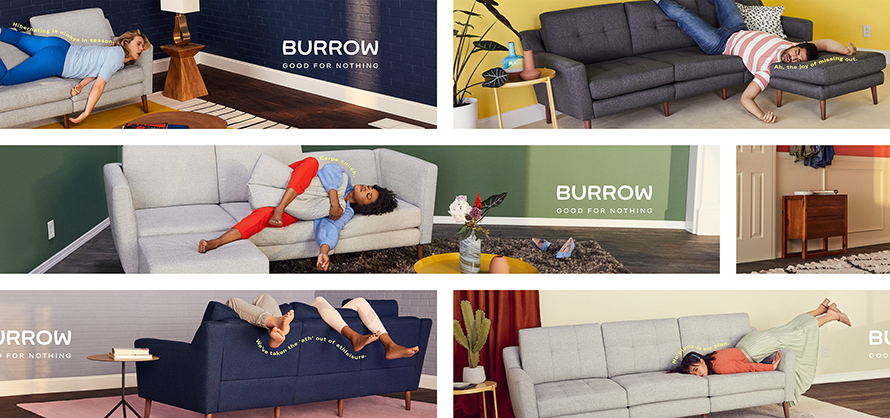
In a world of Amazon, Walmart, Target, and Overstock, is there anything gutsier than trying to sell furniture online? Burrow, a sofa startup, is up to the challenge. Incorporating gorgeous photography, cheeky copy, and a deep understanding of millennial behavior, they have created a campaign that is capturing attention. Their tagline, “Good for Nothing,” is a perfect self-deprecating turn of phrase that speaks to their sense of humor and willingness to disrupt the status quo.

“‘Good for Nothing’ positions Burrow as the sofa brand that’s serious about leisure,” says Red Antler Co-founder and Strategy Chief Emily Heyward. “And the goal of our out-of-home campaign in New York is to remind everyone who’s rushing by and commuting in the busiest city in the world that it’s OK to go home tonight and do absolutely nothing. Hopefully on a comfortable Burrow sofa.”

Challenger Brands Design that Disrupts Burrow

Repairing the Male Ego

Challenging giant corporations is one thing, but using design to challenge stigma and vulnerability is another. Hims, a personal wellness brand, is fueled by one challenger belief—men are allowed to want to take care of themselves. The question is, does the market agree? Well, by March of 2018, Hims had already sold roughly $10 million in product and reached $200 million in valuation. (They only launched in November 2017.) So, that’s a big yes.

“These brands have an aesthetic that appeals to millennials,” said Allen Adamson, Brand Consultant and Co-founder of Metaforce. “It’s smart design without being ostentatious or too snooty. All these products are stylish, and they don’t necessarily pick up on the cues of the category. They pick up on the design language that surrounds young people today.”

Hims’ product line reads like a short list of things that should be difficult to market to those who are uncomfortable talking about it—hair loss, erectile dysfunction, skincare, and vitamins. Instead of shying away from stigma or taboos, they’ve turned it into a massive business opportunity.

Challenger Brands Design that Disrupts Hims

Bird Is the Word

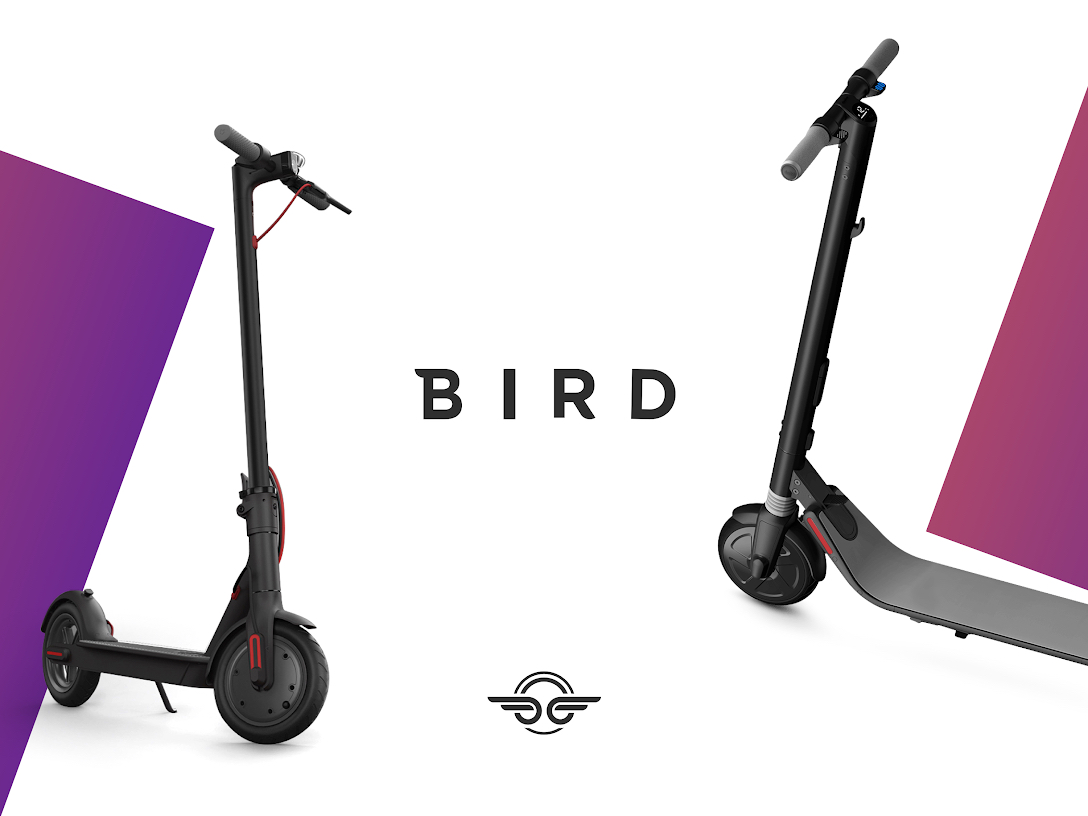
E-scooters are a controversial business, but don’t expect Bird’s founder, Travis VanderZaden, to back down from a challenge. Bird was named Inc’s business of the year, and with good reason. In 14 months, they have expanded to 120 cities and notched a $2 billion evaluation.

The design of Bird feels both professional and whimsical at the same time. The black and white look of the scooter is sleek and clean, but the animated landing video on their website looks like something out of Pixar, full of color and imagination. They seem to capture the childlike freedom of riding a scooter and the Uber-like vision of transforming how a city runs. Their design leaves them poised to take on anyone, whether that’s fellow e-scooter brands, ride-sharing, or even automobile makers.

“He told me the idea of adult scooters and explained how riders would just leave them on the sidewalk, and I was incredulous. I thought he was crazy,” says David Sacks, an early PayPal executive who invested in the company’s seed round. “Once I went to Santa Monica, I realized it was magical,” he says, after he scootered to his destination, without waiting for a cab or sitting in traffic. “I started thinking about how big this idea could become and realized that it’s transformational. You could have millions of these, and start displacing car trips for commuters—and eventually redesign cities.”

Challenger Brands Design that Disrupts Bird

Time to Face the Challenge

Now that we’ve covered strategy, mindset, and design, it’s time to adopt a challenger mindset for your own brand. Every year it gets harder and harder for brands to stand out from the pack. Meaning, there’s never been a better time to be bold, fired-up, and willing to take a risk to differentiate yourself.

To learn more about how your brand can benefit from adopting a challenger mindset, contact Tracy Lloyd at [email protected].

Emotive Brand is a brand strategy and design agency in Oakland, California