Overlay
Let's talk

Hello!

Verbal Branding: Because Words Matter

If you were to open up a brand and look inside, beneath the logo and colors and typefaces, the images and illustrations, the interactions and experiences, you’d find language. It’s because the basic building blocks of brands—the ideas, emotions, aspirations, values, and promises that create value and differentiation—emerge from the words we use to express them. And for a brand to truly resonate, it needs to embody a coherent set of language (Verbal Branding or Verbal Identity) designed to create meaning.

So, What is Verbal Identity Exactly?

Verbal Identity is the practice of using language to focus and amplify how brands create connections. You might think of naming and nomenclature as the tip of the Verbal Identity spear, with messaging, copywriting, and your outward-facing communications following along (here’s more on this in an earlier piece). These are all part of the practice, but the roots of Verbal Identity reach far deeper. In the same way that the brands are inside-out representations of an organization, Verbal Identity considers the language an organization uses to either fortify a position or drive change. (A wonderful distillation of this idea resides in Paul Pangaro’s classic piece on language and organizations).

Verbal Identity isn’t a standalone deliverable—it’s part of the Brand Foundation. Once a company has done the work of establishing what’s true (Conviction), how it competes (Positioning), and how it needs to be felt (Emotional Impact), Verbal Identity is the structured language system that converts each of those into communication: Conviction into language, Positioning into argument, Emotional Impact into tone and expression. It’s not decoration on top of strategy—it’s strategy translated into words.

For example, when a company undertakes the work of articulating its Purpose, it’s engaged in a verbal exercise where mood, tone, associations, nuance, culture, and historical context all inform language choices. Some words can ignite change, while others maintain the status quo. Some words can make people angry. Or apathetic. Or inspired. It’s not the actual word they’re responding to, but the meaning they bring to it. The same thinking goes for articulating the Vision and Mission of a company or codifying its Values. These discussions about language establish the source code for how a brand should show up externally.

Verbal Identity can make an impact on even more mundane parts of your brand. Employees at a healthcare company might be confused when attending a meeting in a conference room named “Mike Tyson.” Organizations that prioritize lasting customer relationships might think twice about branding their SKO “Piranha Week,” as it’s only a matter of time before the metaphor of being skeletonized in a murky river makes its way to prospects.

Why it Matters

What makes Verbal Identity so critical to brands, and also challenging, is that language embodies both literal and emotional meanings. “Sunlight” and “Sunshine” both refer to rays of light, but we tend to measure sunlight and feel sunshine. Writing code gives a set of instructions for what action you want a CPU to perform, while writing narratives gives people instructions on how to embrace the feeling, beliefs, and possibilities underpinning your brand. Maybe most importantly, Verbal Identity creates the linguistic framework for the stories your brand gets to tell—the metaphors and allusions, the voice and imagination. And stories, more than messages, are what people remember and repeat. Code gets executed. Stories live on. 

And in the era of AI, Verbal Identity matters now more than ever. Companies are no longer evaluated one surface at a time. Buyers, investors, analysts, talent—and increasingly AI systems—assemble their understanding of a company from its entire available record: its website, product experience, executive communication, customer language, and sales materials, among other things. AI systems intensify this condition because they synthesize from whatever record exists. When that record is stale, contradictory, generic, or fragmented, the interpretation that comes back is weaker, less specific, and more likely to default to the nearest familiar category—rather than reflect what the company has actually become. Verbal Identity isn’t just how humans experience a brand’s language anymore. It’s also raw material machines use to decide what a company is.

Verbal Identity can be a secret weapon for a brand because, when done well, it connects everything you say internally with how you show up externally. It builds internal alignment around language, which reinforces your external positioning. It helps everyone tell the same story about what you do, how you do it, and why it matters—which, when you’re trying to reinvent a category, offer up a compelling vision, or break through to a new set of customers, is essential to creating clarity, focus, and trust.


Why B2B Tech and AI Companies Need a Growth Manifesto

One of the most important goals of a brand is to drive growth. Focusing a start-up on carving out market share. Positioning a fast-growing tech company to lead its category. Providing a foundation for product or portfolio innovation as a company seeks to reach new audiences. Or helping a global corporation expand its footprint into new geographies. Whatever your aim, brand can accelerate results.

But one of the biggest (missed) brand opportunities is engaging individuals in your organization to see their role in creating the future. When growth is a generic goal, people can assume that someone else is leading it. Disconnected from purpose or vision, growth can feel like a performance driver that serves only the goals of stakeholders. For companies to grow sustainably, positively, and strategically, people in the organization need to feel excited about what growth brings. 

The key to framing growth for your organization is making sure people see business as a process, not an entity. No matter where you are on a growth trajectory, success depends on behaving more like an organism than an organization—continually adapting to changes in the marketplace, the industry, the economy, and the culture. But when change and uncertainty prevail, most businesses are poorly equipped to communicate this distinction to their employees. Conventional objective-setting tools tend to be reactive rather than responsive. And typical brand building blocks tend to define what’s come before rather than guide people to consider what lies ahead.

A new approach for engagement

Emotive has a different approach to helping businesses fulfill their greatest ambitions. Growth is the goal. Emotion is the strategy.

When clients need to realize important outcomes, we work side-by-side with executive leaders to co-author a Growth Manifesto of how—and why—they want to grow. We call this a Growth Manifesto because it serves as a powerful tool for cutting through the noise of function-specific goals, objectives, KPIs, and OKRs to make business and brand more emotionally relevant to the people in an organization. It connects major initiatives—corporate strategy, product, go-to-market, brand, people & culture—in a single, coherent narrative that aligns everyone behind the promise of the brand and the actions required to support it. 

Why create a Growth Manifesto?

Because narratives are fundamental to how human beings share meaning. Stories have the power to move and transform people both intellectually and emotionally. Unlike a traditional plot line—which tends to be self-contained with a beginning, a middle, and an end—this narrative is open-ended. It asks people to see themselves in the situation. It calls on them to imagine what they can do to pursue a higher purpose. It gets people into action by helping them understand the role they need to play on the journey ahead. 

Why do you need a Growth Manifesto when you have a business and brand strategy?

How often does your organization engage in substantive dialogue about what lies ahead? Our experience is that growth conversations begin in past actions, which can be limited by strategies that communicate what you already know—or what you’ve already got—rather than how you intend to do business tomorrow. We also see many organizations that undermine success by planning in silos, despite their best efforts at cross-functional thinking. (Can a marketing team develop an effective go-to-market plan in isolation from the deep thinking poured into a product roadmap? Nope. But it happens all the time.) And a “set-it-and-forget-it” mindset often tanks the desired effect of corporate mission, vision, and values statements. 

The Growth Manifesto does three important things:

  1. It establishes a clear point of view that will influence, guide, and help create your organization’s future. This isn’t a PR exercise. This strategic narrative will have an impact only if it’s deeply felt and true to your business culture. It requires expanding your perspective beyond the products or services you offer, connecting your brand to the broader context of your customers’ lives and to their aspirations.
  2. It ties everything together. All businesses, whether big or small, have multiple critical initiatives going on at any given moment. If the narrative about how they connect is haphazard or unintentional, people will start quilting their own. The result is multiple, individual narratives in pursuit of different end states—in other words, brand confusion.
  3. It creates structure, not stricture. For employees to be truly invested, your narrative must invite some level of co-creation and adaptive thinking. You must give everyone the tools and direction they require to do their jobs well, without being so prescriptive as to limit their tactical freedom to execute. You must ask every employee to use their imagination as they help build and reinforce your brand. 

The Growth Manifesto isn’t meant as a one-and-done alignment activity. It’s an integrative tool that sets a deliberate direction for your business at a given moment. It’s intentionally designed to flex in response to change. To be revisited and updated over time. To adapt in the same way that your business must adapt to the world.

We know that as competition intensifies and companies experience mounting performance pressure, time horizons tend to shrink and most organizations adopt tunnel vision to focus on their most immediate needs and concerns. The Growth Manifesto allows everyone across your business to keep their heads up, with eyes fixed on the horizon, holding both near-term and long-term goals in clear view. More than just selling products or seeking this quarter’s profitability, a Growth Manifesto gives people the ability to see, believe, and participate in creating a future that they know is not only possible but necessary.

See how we helped Lookout, a leader in cybersecurity and cloud security, create a Growth Manifesto that aligned its organization around a shared vision for the future. Read the Lookout case study here.

Emotive Brand is a brand strategy and design firm for product-proven B2B technology and AI companies.

How to Tune-Up Your Bullshit Detector


In the immortal words of Jon Stewart, “Bullshit is everywhere. There is very little that you will encounter in life that has not been, in some way, infused with bullshit.”

As a brand strategy and design firm for product-proven B2B technology and AI companies, we live in the intersection between people and brands. This is perhaps one of the most fertile, organic spaces for bullshit to thrive. The speed of technology has created a sizable gap between those who know what they’re talking about and those who don’t. Our job, to the best of our abilities, is to eradicate the nonsense, the fluff, the jargon, the overpromising and under-delivering.

The truth is, brands have real meaning in our lives, and there is some art in strengthening that connection. We don’t believe in inventing that meaning—the job is to uncover what’s already true about a company and give people a reason to believe it. The inherent tension here is wanting to create something useful, authentic, and emotionally resonant in a space that is and always will be about profit. Some say that’s impossible. Others say that challenge is the very thing that motivates them to produce better work.

Two Ads, Two Approaches in Authenticity

A micro case study: Last month, I attended Pop-Up Magazine, a “live magazine” event that features storytelling, animation, music, and just like a real magazine, ad breaks. It’s a tough space for sponsored content; these commercials are sandwiched between authentic and beautifully produced journalistic pieces.

The first ad break was for Google’s project, BikeAround, which pairs a stationary bike with Google Street View to take dementia patients on a virtual ride down memory lane. Patients input a street address of a place that means something to them—a childhood home, for instance—and then use the pedals and handles to “bike around” their old neighborhoods. By combining mental and physical stimulation, scientists think this can affect memory management in a profound way. When the ad was over, there was huge applause and even a few teary-eyed audience members.

The second ad break was for CHANEL, a fast-paced, noir fever dream that beamed messages like, “Seize beauty, all the time, everywhere you go, in a Venetian church, in a boutique of white camellias, in a baroque angel, because it is a vital necessity” straight into our dull, unperfumed brains. When it was over, several people laughed and one person booed.

Is Honesty Just Another Gimmick?

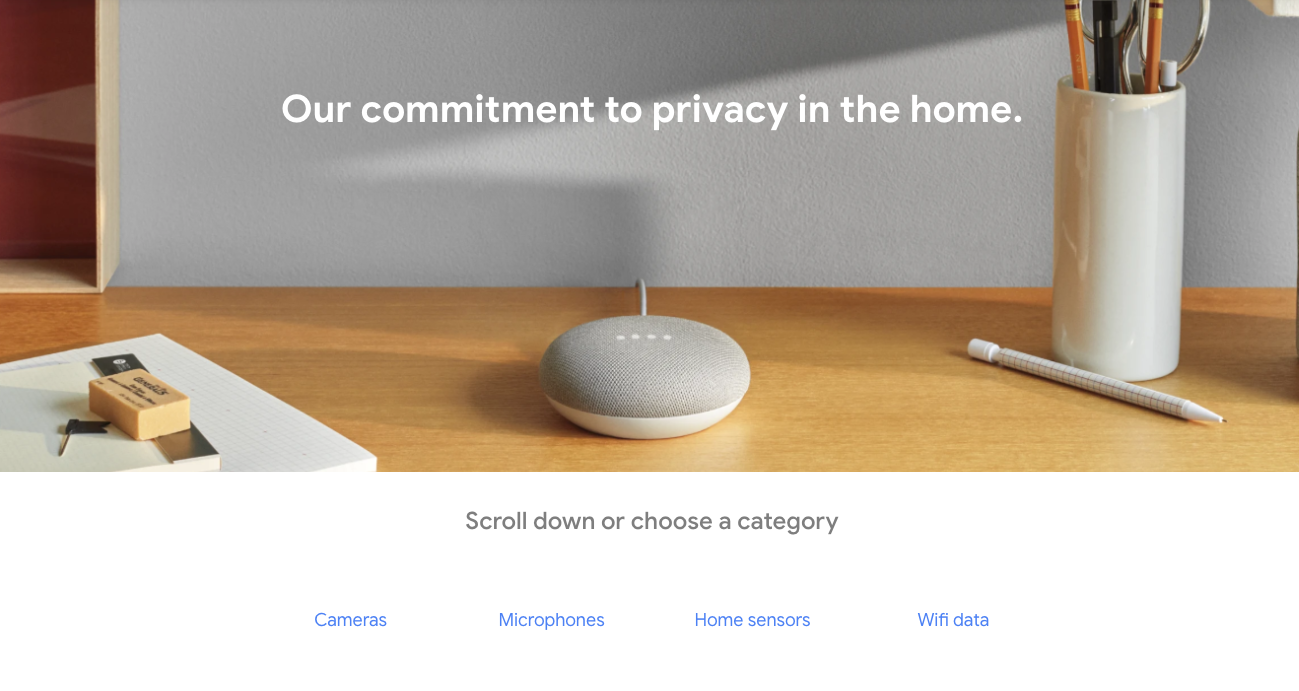
Both Google and CHANEL are trying to sell us something, yet one ad was happily digested and the other spit back. The difference in tone and subject matter here is stark, but it isn’t always as easy to detect. Sure, Google looks like the victor here, but soon after, they were in the news for updating the privacy language for Nest. We all braced for the usual legalese of a terms-and-conditions manifesto, but were stunned to see a surprisingly transparent document. The text was breathable, there was white space, there was even tasteful, edge-to-edge photography. Do we buy it? Or is this another marketing ploy in the nefarious long game to pool our data?

The Mirage of Digital Transformation

The first wave of Bay Area entrepreneurship was largely about pitching a vision of digital transformation that was so luminous, so hyperbolic, you couldn’t help but buy in. It’s that classic scene from Silicon Valley, where, over the course of a minute-long montage, startup founders pledge to “make the world a better place through Paxos algorithms for consensus protocols,” or to “make the world a better place through canonical data models to communicate between endpoints.” No matter how small your product, it was going to have a colossal impact on all mankind, forever and ever.

I believe we’re in a different era, one that rewards radical honesty (or the illusion of it), utility, and a touch of humility. When I think about my favorite brands right now, they are building products that aim to make a notable difference in people’s lives, as opposed to trying to be their whole lives. We want brands to tell the truth, provide value, and then get out of the way.

People are more skeptical than ever, and with good reason. In a world overrun with fake news, AI slop, seamless sponsored content, and media scandals, it can be difficult to know what to believe. According to the Edelman Trust Barometer, today only 52 percent of global respondents trust businesses. The figures are even more dramatic in the U.S., where a mere 48 percent are similarly trusting, down from 58 percent the previous year. Brands clearly need to re-evaluate their messaging strategies if they are to regain the public’s confidence.

An Incomplete Checklist for Avoiding Bullshit

1. Can you describe it in one sentence?
Brevity is the soul of wit. If you can’t explain what you’re doing in one clean sentence, chances are you’re trying to be everything to everyone. A fantastic exercise is the 100-50-10-5 experiment. The challenge is to describe your company or product in increasingly tighter word counts. Think of this as a sieve for filtering out everything inessential about your brand and the value it provides.

2. Does your mom understand it?
Perhaps the hardest test of all: do your parents understand what you do? Beyond brevity, being able to describe yourself in plain language is key. My parents don’t know what a “global p2p marketplace for homestays and experiences” is, but they understand renting out a spare room to a tourist.

3. Can it be translated into another language?
You know what doesn’t translate well? Buzzwords, jargon, the word “unicorn.” Google Translate is one of the most underrated writing tools at your disposal. It forces you to consider your language in a global context, which you probably should be doing anyway.

4. Does a public service already provide it?
For all the disruptors, innovators, trailblazers, and game-changers out there: if you are working on a slightly modified version of an already-existing public service, you’re not revolutionizing anything. That doesn’t mean you don’t have value, it just means the language you use to describe yourself should be reined in. It’s tempting to say you’ve “solved commuting” or “transformed how cities move,” but you have to remember: a tech bus is still, first and foremost, a bus.

5. Who is it really for? Who does it exclude? What does the world look like without it?
Who are you really “making the world a better place” for? Can something be revolutionary if it isn’t inclusive, accessible, affordable? Maybe your product isn’t for everyone—and that’s fine! But then your communications shouldn’t be either. When brands veer out of their lane into “universal good” territory, that’s when people call bullshit.

Like death and taxes, bullshit is inevitable. But we don’t have to let brands get away with it. Let’s enter the era of honesty, humility, and transparency—or at least the closest thing to it.

Emotive Brand is a brand strategy and design firm for product-proven B2B technology and AI companies.

Brand Narrative is a Necessary Part of Brand Strategy

Here we explore the brand narrative as a key element of brand strategy, by explaining what constitutes a brand narrative, demonstrating how it supports the overall brand strategy, and showing the brand scenarios which call for a strong brand narrative.

Continue reading “Brand Narrative is a Necessary Part of Brand Strategy”

Your Verbal Identity Has Never Been More Important

If I’m doing my job right, this first sentence should jump right out and ring the little bell in your heart. Margaret Atwood once said, “A word after a word after a word is power,” and how brands utilize that power is often the difference between cutting through the clutter or simply adding to it. So, how can you wield communication tools to supercharge your business, crystallize your strategy, and foster conversations that create deeper, more meaningful connections? The answer lies in your verbal identity.

Words in a Sea of Pictures

Here’s something people love to say: show, don’t tell. We’re visual creatures. We crave stimulation. I’m bored already, aren’t you? Verbal identity has traditionally taken a backseat to visual identity due to the mono-directional nature of conventional advertising. That is: brands talk to people, mainly through pictures. But with the rise of social media, smart speakers, chatbots, and other environments where there are no images whatsoever, that visual-led monologue has shifted entirely. People talk to brands—and they expect brands to talk back in impactful, human ways. As copywriter Kady Potter says, “This ability to engage in an ongoing dialogue with customers provides an opportunity for companies to more firmly cement their products and services into the consumer consciousness, but doing so successfully requires a consistent, well-defined approach to the use of language.”

What Is a Verbal Identity?

As simply as possible: it’s thinking about what you say, how you say it, and where you’re saying it as a unified system. Or another way: the articulation of your brand through the use of distinct, intentional language. At first blush, this sounds pretty obvious. A brand should speak with “one voice.” But when you start to think about the number of use cases (web copy, ad copy, whitepapers, social posts, even internal communication tools like Slack or Zoom), and how context shifts the tone and reception of each touchpoint, things get messy real fast. Just like humans, that “one voice” must adjust with modulations and variances to read the room while still being authentically itself. As with visual systems, verbal identities are pre-structured through phrases, ideas, and tones.

Why Do You Need a Verbal Identity?

This is sort of like asking, “Why shouldn’t you change your company logo every single day?” Through all the static of our modern era, brands need consistency, clarity, and strength of message to separate the signal from the noise. As our pals over at Siegel + Gale say, a strong verbal identity “cuts down on confusion, increases familiarity, drives loyalty and preference among consumers, shareholders, among people who might work for that company, across a whole host of audiences.” Moreover, as Branding For The People say, it:

  • Infuses your brand’s personality in messaging, including voice, attitude, sense of humor, and more into your actual content and copy.
  • Aims to distinguish your brand from competitors.
  • Creates a consistent personality and voice of the brand across all communication channels.

Words in the Age of AI

AI has made language easier to produce. That makes good language more important, not less. When every company can create more content, the advantage isn’t volume. It’s having something clear and distinctive to say. AI can produce remarkably human prose, but a strong verbal identity does something more: it gives a company a recognizable voice rooted in what it actually believes. When there are more words everywhere, sounding unmistakably like yourself matters.

There’s another shift happening at the same time: people aren’t the only ones interpreting your language anymore. AI systems increasingly help people understand companies, drawing on the websites, interviews, customer stories, product language, and other material already in the world. If that record is stale, inconsistent, or generic, it can reinforce an outdated or indistinct picture of the business. (This contributes to what we call The Belief Gap and you can learn more about it here.) Clear, coherent language gives both people and the systems informing them better material for recognizing the company you’ve actually become.

That makes verbal identity more than the brand color of your words. Language is part of the public record from which understanding gets built. Every expression can strengthen recognition or muddy it. The opportunity now is to make sure the words you put into the world consistently reflect what’s true about the company—and make that truth easier to recognize.

What Are the Components of a Verbal Identity?

Okay, so how do we begin to up-level “copy” into a system of language that drives unmistakable value for your business and brand? Let’s dive into the component parts.

Naming: A brand name is the shortest unit of storytelling you have. A brilliant name provides a glimpse into what a brand stands for and gives audiences a preview of the experience to come. It must be original, memorable, relevant—and here’s the real kicker—available. As our partner and naming expert, Anthony Shore says, “That’s what words do. They create a frame of reference, setting the stage for how your company is differentiated and how it should be perceived.”

Tagline: While not as fashionable as they once were, taglines are still an extremely economical use of language. As the good people at Prophet say, taglines can be deftly utilized to “showcase your reason for being, reposition your company, create a whole new category, or stand out and inspire loyalty.”

Architecture & Nomenclature: Thankfully, not everyone is naming or re-naming their company every day. But almost all organizations, especially those in growth mode, run into the Sisyphean challenge of managing product, service, or feature naming. This is only exacerbated by today’s climate of mergers, acquisitions, and rapid innovation, where portfolios across categories have become complex and inconsistent, ultimately creating a confusing customer experience. Architecture and nomenclature create order and hierarchy around offerings so people know what they’re getting and how it works together as a whole.

Brand Voice: This is your brand’s personality, come to life. How would you describe the way your brand communicates directly in its content, copy, and overall language? Are you genuinely off-kilter and irreverent, like Skittles? Are you vaguely visionary but also heavily workshopped to the point of never being able to offend anybody, like every tech company ever? Think about the unique turn of phrases and attitudes you showcase when communicating.

Brand Tone: Not to be confused with voice, your brand tone is constantly changing. Just look at Starbucks’ creative theory: you can see on a nifty slider how their copywriting shifts. Adjust your tone based on the audience you’re targeting (devs are different than sales), the emotion you’re hoping to evoke (pain points are different than moments of delight), and the medium you’re delivering the message through (whitepapers are different than TikTok).

Strategic Narrative: This is the story of who you are, what you do, who you do it for, what you stand for, and why it matters. It showcases not only the philosophy of your business but also the voice and personality of your brand. It should read like a manifesto and hit like a gut punch.

Brand Grammar: There’s a reason some companies call their workers partners instead of employees. There’s a reason some companies call it emotional well-being instead of an employee assistance program. The words we choose, and why we choose them, are charged with meaning. Especially in sensitive political climates, revisiting your language is crucial. As the world around your customers changes, the language you use needs to keep pace with how they see themselves and what they expect from the companies they engage with. That consideration reaches from vital topics like gender-neutral language all the way down to your philosophy on acronyms, capitalization, and emojis.

Content Strategy: Here’s your plan of attack. Where are we going to be speaking, who are we speaking to, and how often are we going to be bothering them? (Pro tip: less is more.)

Strategic Messaging: Remember, messaging themes aren’t copy—they guide copy. As a high-level communication tool, it’s a way of ensuring flexible, cohesive expressions rather than static, repetitive ones. Delivered as a table, this matrix spans the context/challenge, idea/claim, value/benefit, and proof points for each message—all of which can be adapted for different internal and external audiences. If you hand this to a copywriter on their first day, they should be able to start producing smart stuff for you. You know, after a coffee, at least.

Copywriting & Campaign Development: And finally, mercifully, copywriting. This is where most people’s minds jump straight to: big sexy words on a homepage, baby. But if your language isn’t distilled by the strategic framework of your verbal identity, the words will be hollow. Please, as someone who has written 10,000 puns on data, I’m begging you: never, ever confuse surface-level wit for bone-deep value. Real copy solves problems, makes connections, and is derived from a system that means it’s much more than right—it’s right for you and you alone.

Anything But Ordinary

What happens when this all comes together? You have a name, a descriptor, a structure, a voice and how to use it, a story and what it stands for, a language and where to employ it, and modular, easy-to-understand guides for generating copy that is specific, accurate, trenchant, delightful, hard to ignore and impossible to mistake for anyone else.

When David Walsh, professional gambler and owner of the Museum of Old and New Art, finally hired a Director of Communications, he said, “This is probably the start of our drift to the middle. Make mistakes if you have to, fail if you can, but just stop us becoming ordinary.”

I’ve always loved that. And that’s basically the assignment here, folks. Words are the most powerful currency we have. Use them with conviction, with purpose, and with intention to create a verbal identity that is anything but ordinary.

Emotive Brand is a brand strategy and design firm for product-proven B2B technology and AI companies.

What Is a Brand Idea?

How do people make business decisions? Whether you’re debating a specific word choice or overhauling an entire brand, there’s always a tension between the rational and emotional, the aesthetic and strategic. It’s easy to have a gut instinct over the things that inflame your curiosity, but what about the minuscule? As decision fatigue sets in, how do you ensure your choices are aligned, consistent, and ultimately laddering up to something greater than the sum of its parts?

This is where the concept of brand idea shines. A brand idea is an essence or embodiment of what you stand for. Think of it as a stake in the ground that is used to guide your look, feel, and voice. It gives an emotional dimension to your brand, demonstrates what it’s like to do business with you, and serves as a shorthand for how your brand shows up in the world.

A brand idea is not a tagline. It’s not necessarily something that people would ever see. It’s more of a guiding principle that people feel from your brand experience as a whole.

Examples of Brand Ideas

Let’s look at Starbucks. For years, their brand idea was to be the “third place” in your life. Popularized by sociologist Ray Oldenburg, the third place is a social setting that’s separate from home and work. According to Oldenburg, third places are “anchors” of community life “where you relax in public, where you encounter familiar faces, and make new acquaintances.”

For Starbucks, “third place” works as a call to action for people to engage on a much deeper level than just getting properly caffeinated. Because as they say, life happens over coffee. And given that they have nearly 30,000 retail shops, the idea of serving as an anchor to community life is one they can legitimately occupy.

Decision-makers at Starbucks aren’t always going to agree on the latest holiday cup design, or exactly how much adult contemporary to include on their playlists, but if they are aligned at the highest brand level, every decision will be in service of a greater purpose. That top-level consistency is felt across the board, even if there are individual variations in look and feel.

When Brand Ideas Become Taglines

Obviously, Starbucks would never make “third place” an external message. People would be like, “Your coffee won third place in a coffee contest? I’ll pass, thanks.” But sometimes, brand ideas are so compelling and succinct that they become external taglines.

As brand consultant Will Burns says, “True brand ideas are insulted when you call them taglines. And for God’s sake, don’t call them ‘slogans’ or the brand may unfriend you on Facebook. The best taglines rationalize everything a company/organization has done and inspire everything it will do.”

Most of the time, taglines are simply rational facts communicated well to an audience. They want you to know a piece of information that is very specific. When we think about Nike’s “Just do it,” Apple’s “Think different,” or Kaiser Permanente’s “Thrive,” something much bigger is happening. No one is talking about product-level specifics; they are appealing to a higher state of emotion, purpose, and meaning. These are inspirational, aspirational brand ideas.

LEGO, a brand that has celebrated creativity since 1932, is sublime. Their idea, “Inspiring the builders of tomorrow,” is felt throughout every manifestation of their brand. The company’s retail outlets are designed spaces for family “building” events and kid-friendly exploration areas. LEGOLAND encourages kids to open their imaginations at construction sites that dot the theme parks. Even LEGO movies inspire and encourage the act of making.

GEICO’s “15 minutes could save you 15% or more on car insurance” has seared itself onto the public’s subconscious, but it doesn’t really evoke an emotion or communicate anything about the types of people who use their product. We just imagine a vaguely Australian gecko and move on.

Beyond campaigns, beyond marketing jargon, a great brand idea establishes a common way of seeing. It’s a viewfinder for observing a brand’s unique place in the world, the industry, and most importantly, in people’s hearts.

So, what’s your brand idea?

Emotive Brand is a brand strategy and design firm for product-proven B2B technology and AI companies.